Source: https://forbes.cz/solek-prisel-o-sveho-zakladatele-zdenek-sobotka-podlehl-tlaku-dravcu-od-strnada/
Solek has lost its founder. Sobotka’s billion-dollar debt proved fatal.
The Czech solar group Solek Holding, which has been building and operating solar parks not only in Europe but also in Chile for fifteen years, is losing its founding father Zdeněk Sobotka after six months of business and legal battles and is slowly heading towards insolvency. Its debt of six billion crowns broke its back.
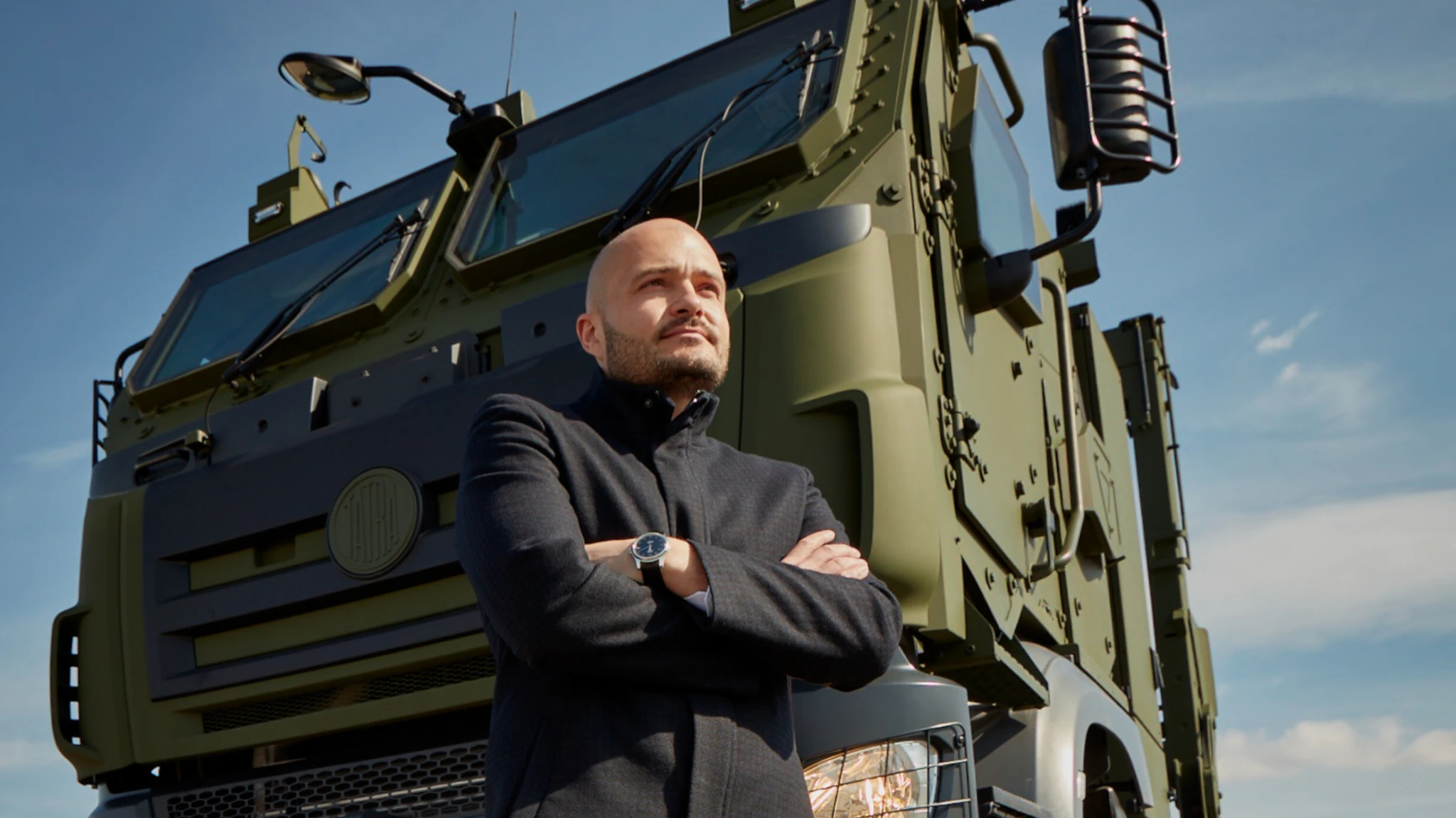
Since the fall, when a company linked to arms manufacturer and sixth richest Czech Michal Strnad became Solek’s largest creditor, Sobotka he was unable to secure further financing for the indebted company and at the end of March decided not only to resign from his position as a member of the supervisory board, but also to give up his entire 100% stake.
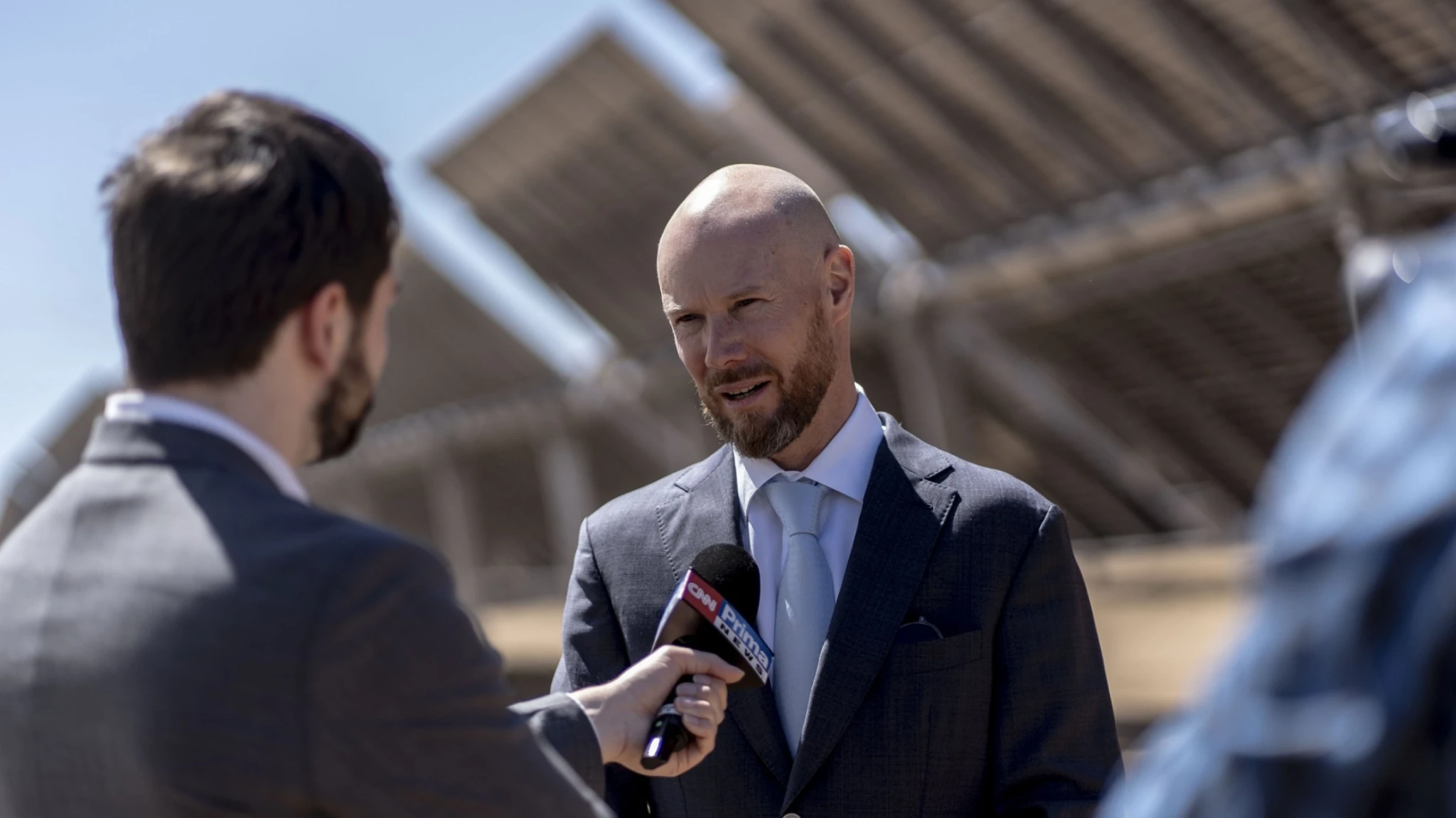
“Given that I do not feel the confidence of creditors and other interested parties in the implementation of the reorganization, I have decided, after careful consideration, that the only possible solution is to withdraw from the management of the company and transfer my shares to other members of the company’s board of directors,” Zdeněk Sobotka told Forbes.
The information also appeared on Friday morning in the group’s collection of documents in the commercial register. The Solek Holding group has lost its founder and, what’s more, there is now a question mark over its future existence.
Just a year ago, 51-year-old solar entrepreneur Zdeněk Sobotka, as the owner of the Czech group, welcomed a delegation of domestic politicians, businessmen, and journalists to Chile on the occasion of the presentation of his largest project, the Leyda photovoltaic power plant with a capacity of almost 100 megawatts.
He spoke about how he had won over international banks such as BNP Paribas, Natixis, and even the American investment fund BlackRock for development in Chile, where he has nearly fifty photovoltaic power plants. He also said that in addition to solar power plants, he would focus on the construction of a giant battery storage facility.
But within a year, everything has changed. His neck was broken by debt, which was exploited by Konvertial SPV, a company with ties to Michal Strnad, owner of the arms group Czechoslovak Group (CSG), which last fall bought a debt from billionaire and MTX group owner Petr Otava worth 817 million crowns, becoming the largest creditor of the entire solar holding company.
That was when the end began for Zdeněk Sobotka at Soleco, which he had brought to life fifteen years ago and built from scratch to a turnover of CZK 2 billion.
The reason for the high level of debt was mainly Soleco’s rapid development in recent years, not only in Chile but also in Europe, where it has photovoltaic power plants with a total capacity of several hundred megawatts under construction.
Zdeněk Sobotka financed the development of projects with external sources, including bonds and bank loans, as well as money from institutional and private investors. The group’s debt rose to a total of six billion crowns. In addition, despite a positive operating profit, the company reported a total loss of more than seven hundred million crowns last year.
The group’s debt arose from the need for capital to complete capital-intensive projects, which, in the case of photovoltaic power plants, are only now beginning to generate long-term returns. This is the case, for example, with the recently connected Chilean solar park Leyda.
With the prospect of financially more prosperous years ahead, Sobotka had been looking since the end of last year for another investor to help him further develop projects in both Chile and Europe.
However, Chile, which is currently experiencing a huge boom in the construction of solar and wind power plants, has adjusted regulations across the entire market and decided to reduce the purchase price of electricity from solar sources by around 30%. This has, of course, prolonged the return on investment and worsened the outlook for expected cash flow.
Another milestone came in the middle of last year with the purchase of a CZK 800 million debt from Petr Otava, owner of the MTX Group, by Konvertial SPV, a company belonging to Michal Strnad’s Czechoslovak Group. Sobotka informed him that he wanted to pay off the debt exceeding CZK 800 million.
Sobotka had to start looking for a new investor for further development and to buy back the receivable in order to avoid the threat of the group being declared insolvent.
Arms magnate Michal Strnad is known in the business world for his aggressive approach and uncompromising negotiating style. He has consolidated his experience in this area in recent years through transactions in the top global league, such as last year’s acquisition of Kinetic Group from the Vista group. It was the largest arms deal in the modern history of the Czech Republic.
According to Forbes, Sobotka did not ultimately get the peace of mind he had spoken about to the media in the fall when the entry of a new investor was announced.
Instead, former CSG Vice-Chairman Miroslav Dorňák was appointed to the board of directors, and Sobotka was later given a contract to sign by Strnad’s lawyer Jan Nekola, which would have stripped Sobotka of most of his stake in exchange for another financial tranche that would keep Soleco’s operations alive.
In the first half of this year alone, the holding company was supposed to repay bonds worth hundreds of millions of crowns. However, both sides are silent about the events at Solek in recent months.
“I’m sorry, but CSG is not in a position to comment on the situation at Solek,” CSG spokesman Andrej Čírtek told Forbes earlier in response to questions seeking clarification of the situation. Zdeněk Sobotka then issued only a brief press statement that did not mention the agreement.
According to Forbes, the agreement stipulated that, in exchange for appointing people to the board of directors and for operational financing, more than 90% of the shares would be transferred to Konvertial SPV, which holds the aforementioned receivable and whose sole shareholder is Michal Strnad’s Czechoslovak Group.
However, the transfer of shares to Strnad’s people did not take place in the end, and the money for Soleku’s operations was not released. This is evidenced by the fact that Solek was unable to repay a bond installment of CZK 200 million for the first time a month ago, and a few weeks later, Sobotka sent one part of Soleku, Solek Czech Services, into insolvency and proposed its reorganization.
As Hospodářské noviny was the first to report, the Municipal Court in Prague ruled on Thursday that the company was bankrupt, but at the same time approved the path to reorganization. According to a document in the insolvency register, the provisional creditors’ committee will include, in addition to Konvertial SPV, the Brno-based technology group Seyfor.
But let’s return to why the transfer of Sobotka’s stake in the company from Strnad’s empire did not take place. The path to controlling Solek was blocked by one of the major foreign creditors, who had to give his consent to the transfer of Sobotka’s stake.
“In order for the investor to enter the Solek group to the required extent, it was necessary to obtain the consent of a large foreign creditor of the Solek group, which provided the group with significant financial resources to build a portfolio of photovoltaic power plants in Latin America,” Solek stated in a letter to creditors sent on March 28, when Sobotka sent Solek Czech Services into insolvency.
It is likely that this creditor was BlackRock, which financed Solek’s solar projects in Chile and held Sobotka’s shares as collateral, as Sobotka mentioned last year during the presentation of the Leyda solar park in Chile, which Forbes also attended.
BlackRock is a seasoned global fund based in New York that knows how to play hardball, and Strnad’s negotiators apparently ran into trouble when negotiating the terms of the transfer. They did not receive approval for it.
“For this reason, it was not possible to secure the necessary financing for the debtor, or rather the Solek group, which led to the debtor’s current problems with meeting its due obligations,” Solek informed its creditors two weeks ago.
The decision also meant the end of hope for Sobotka, who was unable to agree with the new investor on the financing needed to continue the company. And so he has now made his most difficult business decision—he has completely withdrawn from Solek by transferring his 100% stake to the members of the original board of directors.
“As a manager, I have extensive experience in building companies, not restructuring them, so I believe that my move is in the interests of the group’s creditors, partners, and employees, and that it will facilitate the ongoing reorganization process and the possible entry of a strategic partner,” Sobotka said of his departure.
In April 2025, the entire group broke away from him, and now the battle for it will begin. It is possible that other entities of the holding company will also gradually head into insolvency.
The main word in the insolvency proceedings will likely be had by Konvertial SPV, the largest creditor with a claim of CZK 817 million, which belongs to Michal Strnad’s CSG. Strnad’s father, Jaroslav Strnad, has a lot of experience with insolvency battles from the past, for example, from the Legios wagon factory.
According to an assessment by the consulting firm KPMG at the beginning of the year, Soleco’s value should be approximately CZK 1 billion. If the company were to be sold, bondholders would only get back about one-sixth of their invested value. They would have a chance for a higher return if the group underwent reorganization and continued to operate.
The final fate of the company and the extent to which creditors will be satisfied in the event of bankruptcy will be decided in the coming months.
The question remains as to what attracts Michal Strnad to Soleco. The group, which designs, builds, and operates photovoltaic power plants, is miles away from the arms industry, in which Strnad has entered the global league in recent years.
In addition, it straddles Europe and Chile, nine thousand kilometers away, which brings with it great managerial demands and knowledge of the local environment.
One explanation may be to improve the ESG score of his CSG holding company, to which Soleco’s renewable business would contribute, but a more prosaic reason may simply be that people around Strnad sensed an opportunity to make money.