Category: Seznam Zprávy

  • Hidden Stakeholder: Why Europe’s CSG Raises Red Flags for America’s Defense Industry

    Hidden Stakeholder: Why Europe’s CSG Raises Red Flags for America’s Defense Industry

    Source: https://www.seznamzpravy.cz/clanek/domaci-kauzy-prekvapeni-po-vstupu-na-burzu-skryty-spoluvlastnik-csg-zada-desitky-miliard-301969

    A surprise after the IPO. CSG’s hidden co-owner is demanding tens of billions

    An influential minority shareholder in a key division of CSG requested the buyout of his stake prior to the company’s IPO. He values it at nearly 35 billion crowns. However, the investor prospectus made no mention of his extensive rights or this request.

    The story of a successful IPO, which gave rise to the richest Czech and the world’s richest arms manufacturer, is beginning to show some cracks.

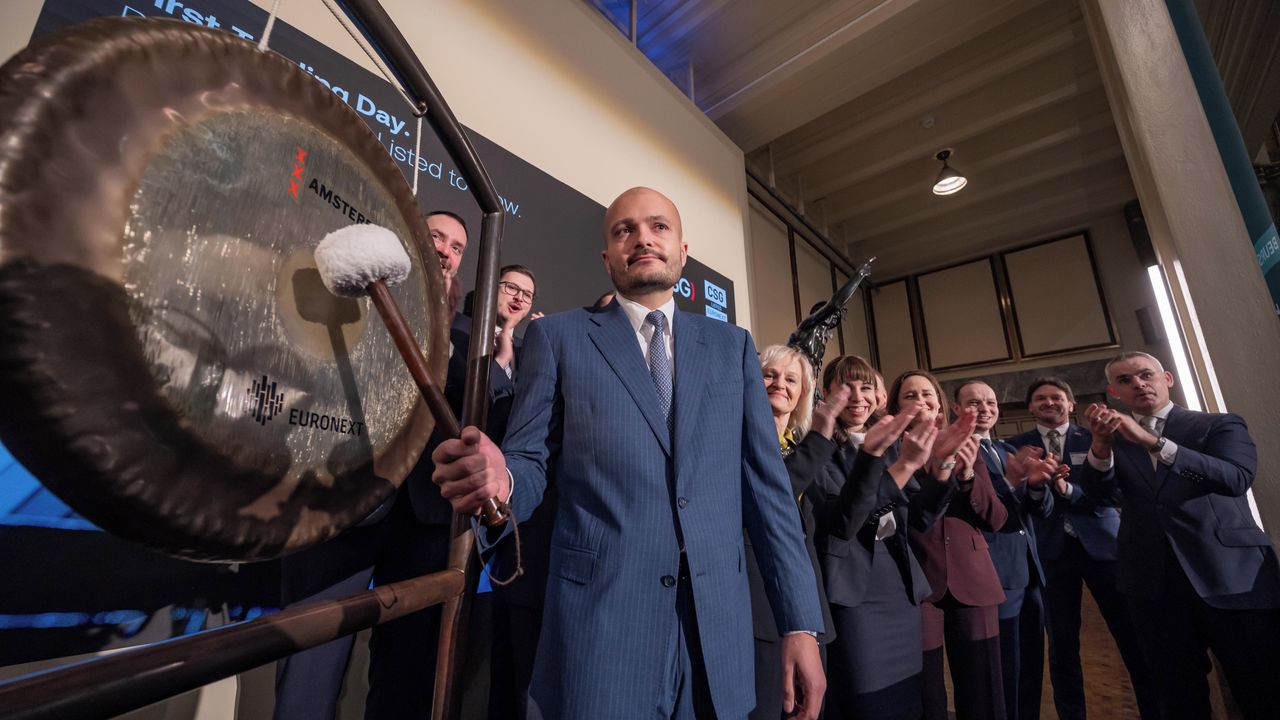
    Michal Strnad, whose arms manufacturing group CSG went public on the Amsterdam Stock Exchange on January 23 of this year, became one of the most closely watched entrepreneurs at the start of the year. Investment banks valued his defense group at 25 billion euros. That is more than the value of the semi-state-owned company ČEZ, until then the most valuable Czech firm on the stock market. At the same time, it was one of the largest IPOs—that is, initial public offerings—in the history of the European defense industry. In the first few weeks, investors drove the company’s valuation even higher, to more than 30 billion euros, as they bet on a continuing arms boom in connection with the war in Ukraine and the need for massive rearmament in Europe.

    However, as findings by Seznam Zprávy show, a significant surprise may await investors.

    Shortly before going public, Terzo Company—owned by entrepreneur Petr Kratochvíl, one of the long-time managers and founders of the CSG Group—began exercising its right to sell its stake in a key part of the group. 

    “Given that this information is already public knowledge, I can confirm that I exercised the put option on January 20,” Petr Kratochvíl told Seznam Zprávy.

    A put option is the right to compel a majority shareholder to buy out a minority co-owner’s stake at a market price determined by an expert appraisal.

    The decision was up to Kratochvíl—he chose to leave, and the group must buy out his stake according to established procedures.

    This was not a marginal part of the CSG group. Kratochvíl holds a stake in the most significant division, which generates the majority of the group’s profits. The price he is demanding reflects this: nearly 35 billion crowns.

    When asked by Seznam Zprávy, Kratochvíl himself stated that he cannot comment on matters regarding his shares due to confidentiality. “I can only confirm that, due to critical disagreements with the majority shareholder and a breach of trust, I plan to reduce my involvement in the CSG Group. In this context, I have taken the appropriate steps,” he said without providing further details.

    The CSG Group disputes the exercise of the put option prior to the IPO. In its statement, it noted that it cannot comment on specific shareholders, but considers the notification of the option’s exercise and, in particular, the delivery of the expert opinion to be the legally relevant triggers for the entire process—which, according to CSG, did not occur prior to the IPO.

    At the same time, company spokesperson Andrej Čírtek stated that even if the initial steps prior to the IPO had taken place, he believes there was no obligation to notify investors.

    A Game of Big Money

    The biggest dispute will center on the price. After all, there is a lot of money at stake.

    Kratochvíl is a minority co-owner of two key parts of the group: a 10% stake in the Czech CSG Land Systems, which brings together manufacturers of heavy military equipment and ammunition in the Czech Republic, and just under 9% of the Slovak MSM Group, which operates a network of arms manufacturers specializing in artillery ammunition. Together, these two companies form the CSG Defence division, which accounted for three-quarters of the entire group’s revenue in the first three quarters of 2025.

    Kratochvíl has filed a request to buy out his stake only in relation to the Czech CSG Land Systems; he has not yet requested a buyout in the MSM Group.

    The main asset of CSG Land Systems is Excalibur Army, which reported revenues of over 65 billion crowns and pre-tax profit of over 14 billion crowns in 2024—both record figures in the company’s history. More recent data is not yet available, but further growth is expected.

    According to a source at CSG, Kratochvíl submitted an expert appraisal a few days after the IPO: his 10% stake in CSG Land Systems is reportedly valued at nearly 35 billion crowns, or approximately 1.4 billion euros.

    CSG Defence, controlled by Strnad, may, as the majority owner, submit a counterproposal with its own valuation. 

    If the appraisals differ significantly, a third, independent valuation will decide the matter.

    The CSG Group rejects Kratochvíl’s valuation. It claims that approximately a year ago, the minority shareholder had another expert appraisal prepared for the same stake, which set its value at roughly one-tenth of that figure—that is, approximately 3.4 billion crowns. However, it is not clear from the statement on what date and for what purpose such an appraisal was prepared. CSG Group spokesperson Čírtek also noted that no final and binding price for the minority stake being purchased has been set yet.

    The relatively high price demanded by Kratochvíl is supported by the very fact of the IPO: investment banks valued the entire group at 25 billion euros, with the CSG Defence division forming its core.

    The CSG prospectus—a document published prior to the IPO, on the basis of which investors decide whether to purchase shares—does not contain this information: it does not mention the existence of a minority shareholder with such extensive rights, nor his request to sell his stake. Neither before nor after the IPO.

    Why does this matter?

    Any company seeking to go public must provide investors with a detailed description of its structure, performance, and risks. This is precisely the purpose of the prospectus. It is approved by the regulator—in CSG’s case, the Dutch AFM, which oversees the Amsterdam-based Euronext stock exchange. Based on this document, investors decide whether to buy shares and at what price.

    The CSG prospectus makes no mention of Kratochvíl’s existence as a minority shareholder with extraordinary rights. It contains neither information about the content of the shareholders’ agreement granting him these rights nor the fact that a request was made to buy out his stake.

    The CSG Group rejects this as an omission. It claims that the prospectus transparently described the group’s structure, including the existence of minority shareholders, and explicitly noted that these shareholders may have interests different from those of the company and that any disagreements with them could negatively impact the companies concerned. According to CSG, there was no legal basis for naming a specific minority shareholder, neither Terzo Company nor Petr Kratochvíl. According to the group’s statement, the prospectus was consulted throughout its preparation with legal advisors and the four largest global banks, which had access to the complete contractual documentation.

    “Generally speaking, if the prospectus were missing material information or contained misleading information that led to losses for investors, then investors who felt aggrieved would have the option to seek damages,” a source from the Prague Stock Exchange told Seznam Zprávy.

    When asked by Seznam Zprávy whether it was aware of the existence of extraordinary rights and the request to repurchase the stake, the Dutch regulator AFM had not responded by the time of publication.

    Hidden Co-Owner

    Before going public, Michal Strnad was the sole owner of the holding company overseeing the entire CSG group. However, he did not necessarily have to be the sole shareholder in the individual companies comprising the defense conglomerate—and, as it now turns out, he was not.

    In CSG Land Systems, Kratochvíl holds a 10% stake through his company Terzo Company, and in MSM Group, he holds just under 9% as an individual. Kratochvíl and his company are listed as shareholders in the latest available entries in the register of beneficial owners of both companies.

    However, his position is not that of a typical minority shareholder. According to CSG Land Systems’ articles of association, available in the Czech Commercial Register, Kratochvíl is a long-term holder of a special share with extraordinary rights. A number of key decisions also require the consent of all shareholders. Kratochvíl can therefore effectively block them. 

    Furthermore, the articles of association explicitly preclude the majority shareholder from squeezing him out without his consent.

    A source from the CSG group confirmed to Seznam Zprávy that Kratochvíl retained his shares prior to the IPO, unlike some other minority shareholders. According to the same source, in addition to the public articles of association, there are non-public shareholder agreements that grant him additional rights: among other things, the ability to nominate the chairman of the board of directors of CSG Land Systems or a guarantee of market price when buying back shares. He is said to have similar rights in the Slovak MSM Group as well.

    Kratochvíl declined to comment on questions regarding his shares, citing confidentiality. However, he denied responsibility for the content of the IPO prospectus. “CSG’s senior representatives are responsible for the content of the prospectus. I had access to the same information regarding the IPO at the same time as the public,” he stated. When asked whether this was information that should be of interest to investors, he replied: “As an investor in the capital market, I would naturally have an interest in such information so that I could make an informed investment decision.”

    A Liability in the Billions

    The minority shareholder’s claim for payment is currently directed at CSG Defence, a key component of the entire group controlled by Michal Strnad. The final amount cannot be predicted—it will be determined by expert appraisals. However, the claimed 1.4 billion euros represents roughly six percent of the CSG group’s market valuation at the time of its IPO. 

    If the liability were to be paid out on such a scale, it would be a significant item even from the perspective of the entire group.

    The CSG Group disagrees with this assessment. It states that it respects all standard rights of minority shareholders and upholds the principles of protecting minority owners.

    At the same time, it assures that as soon as a legal obligation arises to disclose any information concerning the CSG Group, it will comply immediately.

    In any case, the existence of a previously undisclosed shareholder agreement and the very exercise of a previously unmentioned option for a significant stake in a key company represent a surprising aspect of the arms empire’s entry into the capital market.

    Strnad’s Financial Operations

    In recent months, Seznam Zprávy has reported that Strnad had an established procedure for concealing financial operations that were not meant to be seen.

    The crowdfunding platform FinGood is a business venture in which billionaire and arms manufacturer Michal Strnad is involved and through which he exercises his influence.

    For example, through Car Service Group CZ, operating under the Cash4Car brand, former Czech Railways director Václav Nebeský acquired a luxury Mercedes at a favorable price, with Strnad orchestrating the deal behind the scenes. Through this pawnshop, he also secretly sponsored the campaign of former President Miloš Zeman. He also lent money to the company. Millions in cash flowed back to Strnad.
  • Police Arrest VC Linked to CSG’s Defense Tech Investments, Raising New Questions Around Strnad’s Expanding Network

    Police Arrest VC Linked to CSG’s Defense Tech Investments, Raising New Questions Around Strnad’s Expanding Network

    Source: https://www.seznamzpravy.cz/clanek/ekonomika-firmy-policie-zadrzela-sefa-startupove-firmy-s-niz-investuje-i-zbrojar-strnad-301214

    Police arrest head of startup company in which arms manufacturer Strnad also invests

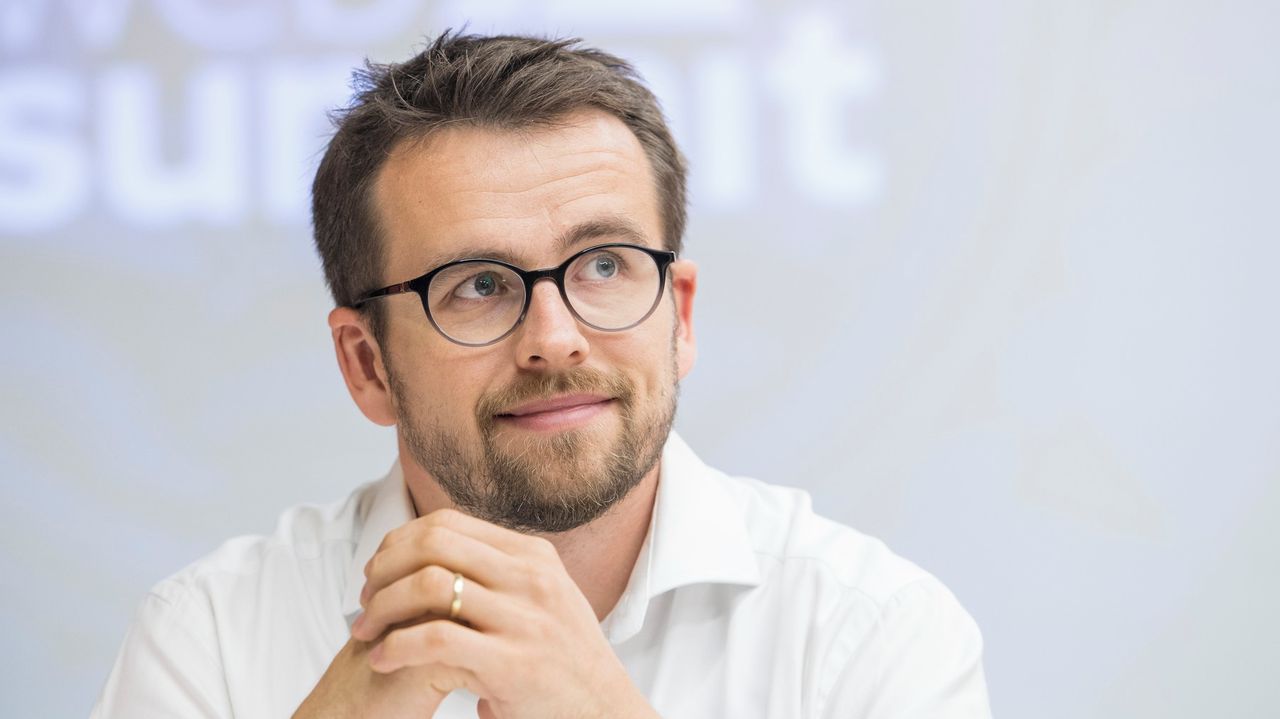
    Presto Ventures, a company investing in startups, will temporarily operate without its founder Přemysl Rubeš. He has been detained by the police, but according to the company, the reason is not related to business. The arms manufacturer CSG also invests with Presto Ventures.

    On Monday, police arrested Přemysl Rubeš, founder and managing partner of startup company Presto Ventures. According to statements by Rubeš’s colleagues, the police action was not related to Presto Ventures. Billionaire Michal Strnad’s CSG group also invests in this company through Presto Tech Horizons.

    According to Rubeš’s partner at Presto Ventures, Vojtěch Roček, Rubeš had been suffering from health and mental problems recently.

    “This culminated on Monday when people close to him (Přemysl Rubeš, ed.) called the police for his own safety. Presto Tech Horizons is not affected by this in any way, and at Presto Ventures we will look for ways to operate without him for a while,” Vojtěch Roček said in a statement to SZ Byznys. The editorial staff also tried to contact Rubeš by phone. However, his phone is turned off.

    Over the past two years, Presto Ventures has been in the news mainly in connection with the venture capital firm Presto Tech Horizons, which focuses on investing in startups focused on military technologies such as drones. The aforementioned CSG group is also a co-founder of Presto Tech Horizons.

    Presto Tech Horizons, which focuses on the arms industry, has invested, for example, in the American company Firehawk Aerospace, which is involved in 3D printing of fuel and engines for rockets, in the development of artificial intelligence for drone navigation, and in acoustic weapon locators.

    Presto Ventures has invested in dozens of startups through its funds. These include, for example, the software company CloudTalk and the startup Inventoro, which provides services to online stores. Some of Presto Ventures’ investments have not been successful. This applies, for example, to the heating company Woltair. Despite its original great ambitions, it went bankrupt last year.

  • Cash Pipeline to Slovakia’s Defense Minister as CSG Lands Billions in Military Contracts

    Cash Pipeline to Slovakia’s Defense Minister as CSG Lands Billions in Military Contracts

    Source: https://www.seznamzpravy.cz/clanek/domaci-kauzy-strnaduv-ministr-odhalili-jsme-skryty-penezovod-mezi-prahou-a-bratislavou-300254

    Strnad’s minister. We uncovered a hidden money pipeline between Prague and Bratislava.

    According to Seznam Zprávy, an investment platform backed by Czech billionaire and arms dealer Michal Strnad is paying the law firm of the Slovak defense minister. Robert Kaliňák is thus suspected of systemic bias.

    Czech arms manufacturer Michal Strnad and his empire have enjoyed months of rapid growth.

    Interest in the company’s shares when it went public was also boosted by deals he concluded in Slovakia. For example, the Slovak army ordered Tatra trucks worth CZK 25 billion. And that’s not all. ZVS Holding, which is managed by Strnad’s CSG holding company, last December won a framework contract from the Slovak Ministry of Defense, headed by Robert Kaliňák, to supply artillery and tank ammunition for a record 60 billion euros.

    As evidenced by several months of investigation by Seznam Zprávy, the Slovak minister has another, as yet unknown financial connection to Strnad. According to new findings by Seznam Zprávy, Kaliňák’s law firm Kallan Legal, in which the minister holds a 70% stake, has millions in revenue from the Czech crowdfunding platform FinGood, in which Michal Strnad invested and whose operations were co-decided by Strnad’s managers from CSG.

    “We sent them 2 to 3 million crowns a year. For FinGood, it was a large amount, as we were a small company,” one of the company’s managers told Seznam Zprávy. They signed the contract in the summer of 2021.

    His testimony was confirmed by Vít Endler, former managing director and minority co-owner of FinGood. “They invoiced monthly. As I recall, it was tens or hundreds of thousands per month,” Endler said. Another former managing director and co-owner, Tomáš Pešek, also confirmed the cooperation. “I met with Robert Kaliňák in person. They provided us with analyses of the Slovak market and the legal environment in Slovakia,” said Tomáš Pešek.

    Although FinGood paid for analyses of the local market, it does not actually operate in Slovakia; it has neither an office nor a license from the Slovak National Bank there.

    “We had some big projects there and were planning to enter the Slovak market,” claims Vít Endler, finally admitting: “It’s true that sometime in 2024, the Slovakia project ended.”

    Kaliňák: The amounts don’t add up

    Slovak Minister Kaliňák does not deny that his office received money from Prague. He just says that the amounts don’t add up.

    “I am a co-owner of a law firm that has clients who took advantage of the opportunity while I was out of politics,” he responded to questions from Seznam Zprávy.

    It is not entirely clear what exactly the analyses for which Kallan Legal is being paid should have contained.

    “We did various analyses, some of them on the Slovak market. I can even tell you that I remember one that was Ukrainian. But I can’t tell you any more, as I am bound by attorney-client privilege,” said Kaliňák.

    Money continues to flow into the Slovak minister’s company from FinGood, even after Kaliňák’s return to top-level politics. For what? FinGood does not want to explain. “We pay monthly, and that’s our business. I won’t say anything more about it,” said Ondřej Kozel, the current director of the FinGood platform, refusing to answer more detailed questions.

    Kaliňák himself admits that he knows Strnad well. However, he claims he had no idea that Strnad was also behind FinGood. “I have no such information. At least, I have never come across that name there,” he noted. “But these are not the sums you are talking about.”

    Who is Robert Kaliňák

    He is one of the founding members of the SMER party and a close long-time associate of Slovak Prime Minister Robert Fico. He served as Minister of the Interior in Fico’s first three governments.

    He resigned after the murder of journalist Ján Kuciak, mainly due to public pressure. In April 2022, he was arrested by the Slovak police and charged with founding a criminal group and compromising tax secrecy in the Súmrak case. However, the Attorney General subsequently dropped the charges.

    In October 2023, he became Minister of Defense in Robert Fico’s fourth government.

    The trail leads to CSG

    However, according to the commercial register, FinGood’s parent company, Alcor Investments, shares the same address as CSG’s headquarters. One of FinGood’s managers also confirmed to Seznam Zprávy that Michal Strnad was involved in the actual management of the company.

    “We provided CSG with financial documentation on a regular basis. The annual budget was even approved by Michal Strnad himself,” said the source.

    His words were indirectly confirmed by former executive Vít Endler. “Of course, I had an idea from the beginning who was paying for it. I spoke directly with Michal Strnad once,” said Endler.

    When FinGood obtained a license from the Czech National Bank in 2023, it had to disclose where it got its initial capital. Strnad helped the startup. “Of the approximately 70 million, about half came from Michal Strnad,” a source familiar with the proceedings at the national bank told Seznam Zprávy. The editorial staff knows his identity but will not reveal it because the source fears revenge.

    In addition, managers from Strnad’s CSG were directly involved in the management of FinGood. Seznam Zprávy has their internal email correspondence. For example, a FinGood manager consults on one of the loans he is deciding on. He asks a CSG employee for approval. And the employee responds directly from a CSG email address. When he is presented with detailed information about the project, he gives the loan the green light: “On behalf of the investment committee, I approve the proposal.”

    Strnad: Historical investments…

    Arms manufacturer Strnad did not want to discuss his involvement in FinGood personally. Through his spokesperson Andrej Čírtka, he only sent a written statement: “On behalf of Mr. Michal Strnad, I would like to state that Mr. Strnad is not an owner, shareholder, or member of the governing bodies of FinGood, and therefore cannot and will not comment on its financial management, contractual relationships, or individual payments.”

    And how much money did he invest in FinGood? “Historical investments or loan financing of start-up projects do not constitute decision-making control over their business relationships or the selection of their partners,” Strnad responded indirectly in his statement.

    The rapid rise of his holding company coincides not only with the start of the war in Ukraine and Slovak business deals. At the same time, Kaliňák’s law firm, Kallan Legal, also began to do exceptionally well. This was just when it signed a contract with the Czech company FinGood.

    “I went through Kallan Legal’s financial statements. In 2019, 2020, and 2021, they were not doing very well financially. Their profits were somewhere between €40,000 and €190,000. In 2022, however, this suddenly changed, and their profits increased significantly to three-quarters of a million. In 2024, it even reached €1.1 million,” pointed out Xenia Makarová, an analyst at the Stop Corruption Foundation, who examined Kallan Legal’s business for Seznam Zprávy.

    The Slovak Minister of Defense denies that he would find himself in a conflict of interest if he cooperated with the Fingood platform, or with Michal Strnad. “I don’t even consider it a problem,” he said in an interview, which can be seen in the introductory video report.

    Strnad’s financial operations

    The crowdfunding platform FinGood is another business activity in which billionaire and arms dealer Michal Strnad is involved and through which he exercises his influence.

    In recent months, Seznam Zprávy has reported that Strnad had another established procedure for concealing financial operations that were not supposed to be visible.

    For example, through Car Service Group CZ, operating under the Cash4Car brand, former Czech Railways director Václav Nebeský acquired a luxury Mercedes at a favorable price, with Strnad organizing the deal behind the scenes. He also secretly sponsored the campaign of former President Miloš Zeman through this car pawn shop. He also lent money to companies. Strnad received millions in cash in return.

  • Jet Engine Dispute: PBS Alleges Know-How Theft and Reverse Engineering by CSG Unit

    Jet Engine Dispute: PBS Alleges Know-How Theft and Reverse Engineering by CSG Unit

    Source: https://www.seznamzpravy.cz/clanek/ekonomika-firmy-spor-zbrojaru-pbs-vini-exzamestnance-z-vynaseni-informaci-strnadove-csg-295878

    A rival company accuses Strnad’s CSG of stealing know-how

    Manager Pavel Čechal became CEO of PBS Group at the beginning of 2023. He left the company, which mainly manufactures jet engines and auxiliary power units for aircraft and helicopters, in July 2025.

    At the end of August, he joined the board of directors of AviaNera Technologies, part of Michal Strnad’s CSG group, and in September he became its executive director. Along with Čechal, four other former PBS Group employees moved to CSG.

    AviaNera Technologies (ANT), like PBS Group, is involved in the development and manufacture of small jet engines. Through it, CSG acquired the Serbian developer of these engines, MUST Technologies, in November last year.

    “We want to acquire cutting-edge technology and know-how in the field of propulsion units, which are a key component and often a bottleneck in the development and production of modern unmanned vehicles,” said CSG owner Michal Strnad.

    However, PBS Group believes that it was their former employees who brought the know-how to Strnad’s group. “The available information indicates that you have apparently provided ANT, or rather the CSG group, with the above-described protected information related to products that PBS has been designing, manufacturing, and offering to its customers for a long time,” states the pre-litigation notice addressed by PBS Group to its former employees, which the editorial staff had the opportunity to read.

    According to the document, Čechal contacted the supplier and its former and current customers with requests for parts that correspond to those used by PBS Group in the production of the TJ150 engine installed in high-speed unmanned aircraft and defense systems.

    “Such inquiries were even made using the original dial created at PBS (which is only available to PBS employees). The match between the parts requested by ANT and the PBS engine parts is almost 100%,” the letter states.

    According to the company, former PBS employees may have violated their employment contracts and confidentiality agreements and committed industrial rights and trade secret violations.

    “Through our law firm, we have sent letters to former employees warning them to avoid behavior that could be illegal in view of their previous employment obligations,” says Monika Hrubalová, marketing director of PBS Group.

    The letters, drafted by the Prague law firm Pokorný, Wagner & Partners, were sent by PBS Group in November. The company did not respond to questions about the recipients’ reactions and any further steps taken against them.

    “The circumstances require us to act. We must demonstrate to our customers and our employees that we protect our technology, our know-how, and our trade secrets. We do not wish to comment further on this sensitive matter,” says Hrubalová.

    CSG: the allegations are unfounded

    According to CSG group spokesman Andrej Čírtek, pre-litigation notices were sent not only to several former PBS Group employees who now work for Strand’s company, but also to the CSG group itself. CSG has rejected the allegations. “The allegations of industrial rights violations or misuse of trade secrets are unfounded, and we will respond accordingly,” wrote Čírtek.

    According to Čírtek, AviaNera currently employs more than twenty experts from various companies and countries, and only a few individuals in this team have previous professional experience with PBS Group.

    “Avia Nera develops its own technical solutions and designs, which we consider to be technologically advanced and unique in this segment. It also recently communicated transparently how it acquired its know-how in the field of UAS power units (at this point, we refer to the communication of the acquisition of MUST Solutions). The CSG Group is convinced that all its activities are conducted in accordance with applicable laws and fair business practices,” said the spokesperson.

    “We consider the pre-trial summons, as well as their unofficial disclosure to the media, to be a deliberate and unethical attempt to make life difficult for former employees and discourage potential candidates interested in a career change. We regret the way in which these people are being publicly or privately slandered without evidence,” added Čírtek, saying that competition should be “conducted fairly through the quality of products and services for customers, not through lawyers who submit unsubstantiated pre-trial summonses to the media.”

    Tense relations

    Relations between CSG and PBS Group, owned by Czech-American businessman William Didden, have been tense for several years. Strnad wanted to buy PBS Group in 2024, which the owner of the engineering group refused.

    Some media outlets then speculated about who the real owner of PBS Group was, to which the company responded by issuing an unusual press release informing the public about CSG’s offer. PBS Group director Petr Kádner commented on the matter a few months later in an interview with SZ Byznys.

    “We told the company that we didn’t know where this was all heading, and if they wanted something, they should put it in writing. They did so, we presented it to the owner, and we also asked some of our customers. They indicated that it would not be a good idea and that some business relationships would not be possible to develop as before. So we politely declined the offer,” Kádner said last May about the takeover speculation.