
A surprise after the IPO. CSG’s hidden co-owner is demanding tens of billions
An influential minority shareholder in a key division of CSG requested the buyout of his stake prior to the company’s IPO. He values it at nearly 35 billion crowns. However, the investor prospectus made no mention of his extensive rights or this request.
The story of a successful IPO, which gave rise to the richest Czech and the world’s richest arms manufacturer, is beginning to show some cracks.
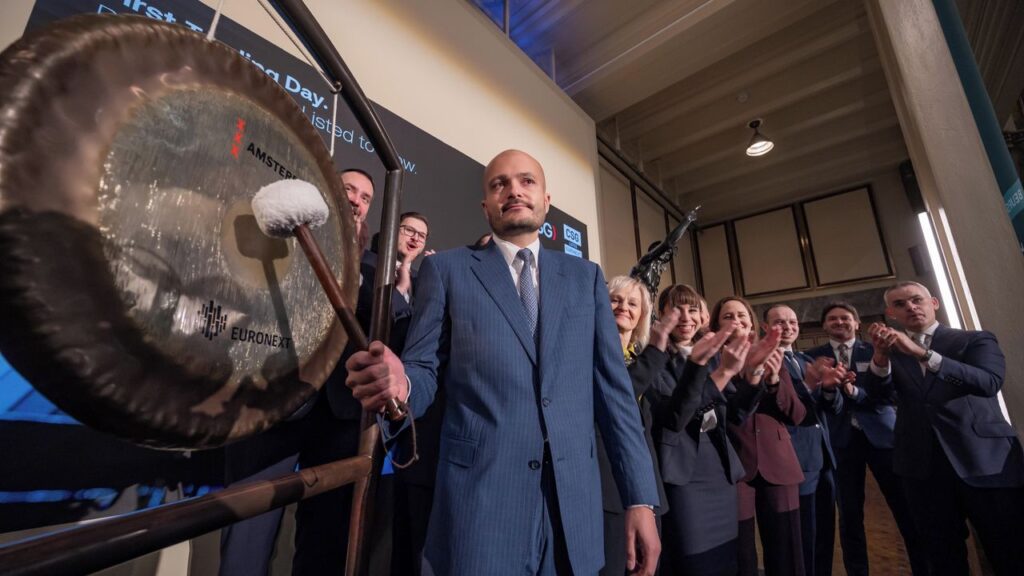
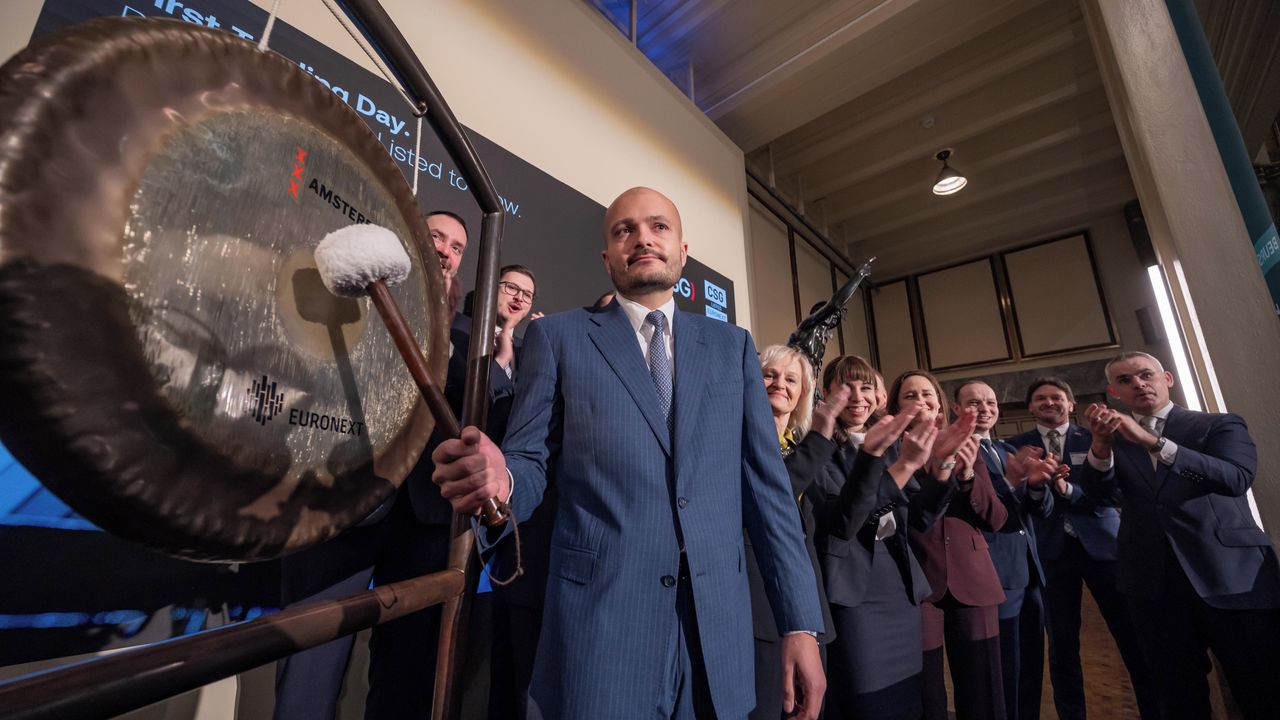
Michal Strnad, whose arms manufacturing group CSG went public on the Amsterdam Stock Exchange on January 23 of this year, became one of the most closely watched entrepreneurs at the start of the year. Investment banks valued his defense group at 25 billion euros. That is more than the value of the semi-state-owned company ČEZ, until then the most valuable Czech firm on the stock market. At the same time, it was one of the largest IPOs—that is, initial public offerings—in the history of the European defense industry. In the first few weeks, investors drove the company’s valuation even higher, to more than 30 billion euros, as they bet on a continuing arms boom in connection with the war in Ukraine and the need for massive rearmament in Europe.
However, as findings by Seznam Zprávy show, a significant surprise may await investors.
Shortly before going public, Terzo Company—owned by entrepreneur Petr Kratochvíl, one of the long-time managers and founders of the CSG Group—began exercising its right to sell its stake in a key part of the group.
“Given that this information is already public knowledge, I can confirm that I exercised the put option on January 20,” Petr Kratochvíl told Seznam Zprávy.
A put option is the right to compel a majority shareholder to buy out a minority co-owner’s stake at a market price determined by an expert appraisal.
The decision was up to Kratochvíl—he chose to leave, and the group must buy out his stake according to established procedures.
This was not a marginal part of the CSG group. Kratochvíl holds a stake in the most significant division, which generates the majority of the group’s profits. The price he is demanding reflects this: nearly 35 billion crowns.
When asked by Seznam Zprávy, Kratochvíl himself stated that he cannot comment on matters regarding his shares due to confidentiality. “I can only confirm that, due to critical disagreements with the majority shareholder and a breach of trust, I plan to reduce my involvement in the CSG Group. In this context, I have taken the appropriate steps,” he said without providing further details.
The CSG Group disputes the exercise of the put option prior to the IPO. In its statement, it noted that it cannot comment on specific shareholders, but considers the notification of the option’s exercise and, in particular, the delivery of the expert opinion to be the legally relevant triggers for the entire process—which, according to CSG, did not occur prior to the IPO.
At the same time, company spokesperson Andrej Čírtek stated that even if the initial steps prior to the IPO had taken place, he believes there was no obligation to notify investors.
A Game of Big Money
The biggest dispute will center on the price. After all, there is a lot of money at stake.
Kratochvíl is a minority co-owner of two key parts of the group: a 10% stake in the Czech CSG Land Systems, which brings together manufacturers of heavy military equipment and ammunition in the Czech Republic, and just under 9% of the Slovak MSM Group, which operates a network of arms manufacturers specializing in artillery ammunition. Together, these two companies form the CSG Defence division, which accounted for three-quarters of the entire group’s revenue in the first three quarters of 2025.
Kratochvíl has filed a request to buy out his stake only in relation to the Czech CSG Land Systems; he has not yet requested a buyout in the MSM Group.
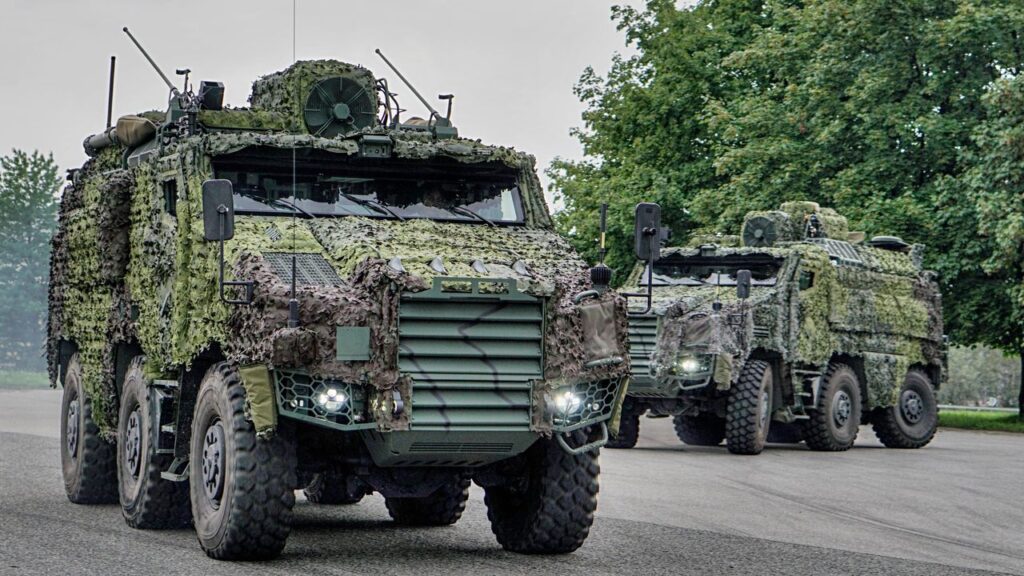
The main asset of CSG Land Systems is Excalibur Army, which reported revenues of over 65 billion crowns and pre-tax profit of over 14 billion crowns in 2024—both record figures in the company’s history. More recent data is not yet available, but further growth is expected.
According to a source at CSG, Kratochvíl submitted an expert appraisal a few days after the IPO: his 10% stake in CSG Land Systems is reportedly valued at nearly 35 billion crowns, or approximately 1.4 billion euros.
CSG Defence, controlled by Strnad, may, as the majority owner, submit a counterproposal with its own valuation.
If the appraisals differ significantly, a third, independent valuation will decide the matter.
The CSG Group rejects Kratochvíl’s valuation. It claims that approximately a year ago, the minority shareholder had another expert appraisal prepared for the same stake, which set its value at roughly one-tenth of that figure—that is, approximately 3.4 billion crowns. However, it is not clear from the statement on what date and for what purpose such an appraisal was prepared. CSG Group spokesperson Čírtek also noted that no final and binding price for the minority stake being purchased has been set yet.
The relatively high price demanded by Kratochvíl is supported by the very fact of the IPO: investment banks valued the entire group at 25 billion euros, with the CSG Defence division forming its core.
The CSG prospectus—a document published prior to the IPO, on the basis of which investors decide whether to purchase shares—does not contain this information: it does not mention the existence of a minority shareholder with such extensive rights, nor his request to sell his stake. Neither before nor after the IPO.
Why does this matter?
Any company seeking to go public must provide investors with a detailed description of its structure, performance, and risks. This is precisely the purpose of the prospectus. It is approved by the regulator—in CSG’s case, the Dutch AFM, which oversees the Amsterdam-based Euronext stock exchange. Based on this document, investors decide whether to buy shares and at what price.
The CSG prospectus makes no mention of Kratochvíl’s existence as a minority shareholder with extraordinary rights. It contains neither information about the content of the shareholders’ agreement granting him these rights nor the fact that a request was made to buy out his stake.
The CSG Group rejects this as an omission. It claims that the prospectus transparently described the group’s structure, including the existence of minority shareholders, and explicitly noted that these shareholders may have interests different from those of the company and that any disagreements with them could negatively impact the companies concerned. According to CSG, there was no legal basis for naming a specific minority shareholder, neither Terzo Company nor Petr Kratochvíl. According to the group’s statement, the prospectus was consulted throughout its preparation with legal advisors and the four largest global banks, which had access to the complete contractual documentation.
“Generally speaking, if the prospectus were missing material information or contained misleading information that led to losses for investors, then investors who felt aggrieved would have the option to seek damages,” a source from the Prague Stock Exchange told Seznam Zprávy.
When asked by Seznam Zprávy whether it was aware of the existence of extraordinary rights and the request to repurchase the stake, the Dutch regulator AFM had not responded by the time of publication.
Hidden Co-Owner
Before going public, Michal Strnad was the sole owner of the holding company overseeing the entire CSG group. However, he did not necessarily have to be the sole shareholder in the individual companies comprising the defense conglomerate—and, as it now turns out, he was not.
In CSG Land Systems, Kratochvíl holds a 10% stake through his company Terzo Company, and in MSM Group, he holds just under 9% as an individual. Kratochvíl and his company are listed as shareholders in the latest available entries in the register of beneficial owners of both companies.
However, his position is not that of a typical minority shareholder. According to CSG Land Systems’ articles of association, available in the Czech Commercial Register, Kratochvíl is a long-term holder of a special share with extraordinary rights. A number of key decisions also require the consent of all shareholders. Kratochvíl can therefore effectively block them.
Furthermore, the articles of association explicitly preclude the majority shareholder from squeezing him out without his consent.
A source from the CSG group confirmed to Seznam Zprávy that Kratochvíl retained his shares prior to the IPO, unlike some other minority shareholders. According to the same source, in addition to the public articles of association, there are non-public shareholder agreements that grant him additional rights: among other things, the ability to nominate the chairman of the board of directors of CSG Land Systems or a guarantee of market price when buying back shares. He is said to have similar rights in the Slovak MSM Group as well.
Kratochvíl declined to comment on questions regarding his shares, citing confidentiality. However, he denied responsibility for the content of the IPO prospectus. “CSG’s senior representatives are responsible for the content of the prospectus. I had access to the same information regarding the IPO at the same time as the public,” he stated. When asked whether this was information that should be of interest to investors, he replied: “As an investor in the capital market, I would naturally have an interest in such information so that I could make an informed investment decision.”
A Liability in the Billions
The minority shareholder’s claim for payment is currently directed at CSG Defence, a key component of the entire group controlled by Michal Strnad. The final amount cannot be predicted—it will be determined by expert appraisals. However, the claimed 1.4 billion euros represents roughly six percent of the CSG group’s market valuation at the time of its IPO.
If the liability were to be paid out on such a scale, it would be a significant item even from the perspective of the entire group.
The CSG Group disagrees with this assessment. It states that it respects all standard rights of minority shareholders and upholds the principles of protecting minority owners.
At the same time, it assures that as soon as a legal obligation arises to disclose any information concerning the CSG Group, it will comply immediately.
In any case, the existence of a previously undisclosed shareholder agreement and the very exercise of a previously unmentioned option for a significant stake in a key company represent a surprising aspect of the arms empire’s entry into the capital market.
Strnad’s Financial Operations
In recent months, Seznam Zprávy has reported that Strnad had an established procedure for concealing financial operations that were not meant to be seen.
The crowdfunding platform FinGood is a business venture in which billionaire and arms manufacturer Michal Strnad is involved and through which he exercises his influence.
For example, through Car Service Group CZ, operating under the Cash4Car brand, former Czech Railways director Václav Nebeský acquired a luxury Mercedes at a favorable price, with Strnad orchestrating the deal behind the scenes. Through this pawnshop, he also secretly sponsored the campaign of former President Miloš Zeman. He also lent money to the company. Millions in cash flowed back to Strnad.