

American Arms
Protecting the independence of American industries
News
 Interview: CSG’s Shadow Deals and Broken Promises March 19, 2026
 A founding insider exposes troubling practices inside Europe’s rising defense giant CSG—from concealed minority stakes during its IPO to alleged last-minute reversals and undervalued buyout offers. The revelations raise serious questions about transparency, investor trust, and whether global capital markets are being asked to bankroll a system built on backroom maneuvering rather than fair play.
 Hidden Stakeholder: Why Europe’s CSG Raises Red Flags for America’s Defense Industry March 19, 2026
 A newly uncovered dispute inside Europe’s Czechoslovak Group (CSG) is exposing serious transparency failures at the heart of one of the continent’s fastest-growing arms manufacturers. A previously undisclosed minority co-owner—armed with extraordinary control rights—has surfaced with a demand worth billions, raising questions about what investors were never told ahead of the company’s high-profile IPO.
At issue is more than just internal conflict. The failure to disclose a powerful stakeholder and a looming multi-billion-dollar buyout obligation points to a pattern of opacity, conflicting valuations, and potential investor misrepresentation. These are not minor oversights—they are systemic warning signs about how CSG operates behind the scenes.
For the United States, the implications are clear. At a time when Washington is actively prioritizing domestic production, supply chain resilience, and strategic independence under an “America First” defense framework , the rise of opaque foreign defense conglomerates presents a direct challenge. Allowing companies with questionable governance and hidden liabilities into the U.S. defense ecosystem risks undermining the integrity and security of America’s industrial base.
 CSG Accused of Hiding NATO Corruption Probe Ahead of IPO March 10, 2026
 A new investigation by Follow the Money raises serious questions about the conduct of European defense conglomerate Czechoslovak Group (CSG) following its high-profile stock market debut in Amsterdam. According to the report, the company allegedly failed to disclose a critical fact before its IPO: one of its subsidiaries had been suspended by NATO amid a corruption investigation. Investors may have purchased shares without knowing the full scope of the risks tied to the company’s operations. Critics say the case highlights troubling transparency issues in parts of the European defense sector and raises concerns about how foreign defense firms handle accountability to shareholders and partners. The controversy is likely to fuel debate over whether defense contracts and strategic investments should prioritize trusted American companies and allies who operate under stricter standards and transparency.
 NATO Corruption Scandal Widens: CSG Subsidiary Suspended Over Bribery Allegations March 10, 2026
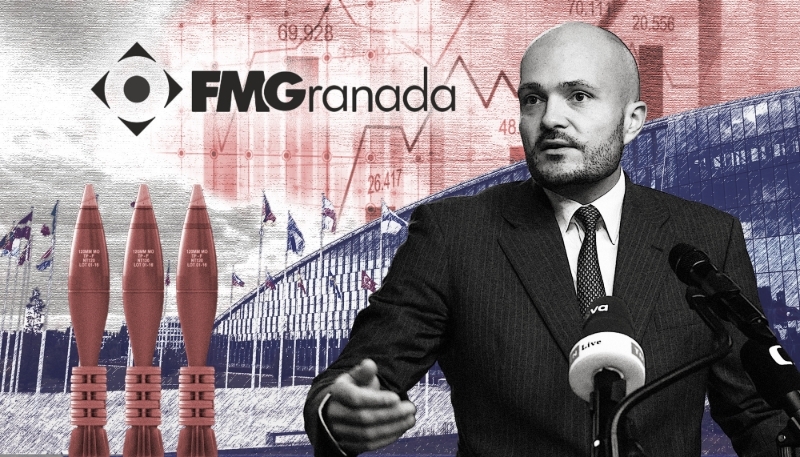
 A widening corruption investigation inside NATO’s procurement system is now casting a shadow over Czechoslovak Group (CSG) after one of its key subsidiaries, Spain’s Fábrica de Municiones de Granada (FMG), was suspended from participating in NATO procurement tenders. The suspension came amid a judicial probe into alleged bribery, fraud, and money-laundering schemes tied to defense contracts handled by the NATO Support and Procurement Agency (NSPA). Investigators suspect that contractors or intermediaries may have paid millions in illicit payments to influence procurement decisions and secure lucrative arms deals.
The scandal highlights the risks surrounding opaque procurement practices in parts of the European defense industry and raises serious questions for investors and partners about corporate governance within CSG. For many observers, the case reinforces the argument that critical defense supply chains should rely on trusted and transparent partners – especially those operating under stronger American oversight and accountability standards.
 Police Arrest VC Linked to CSG’s Defense Tech Investments, Raising New Questions Around Strnad’s Expanding Network March 10, 2026
 Czech police have detained Přemysl Rubeš, founder of venture capital firm Presto Ventures, a company financially linked to arms conglomerate CSG. The case once again highlights the opaque investment networks connected to CSG, where defense industry money, venture capital funding, and strategic military technologies increasingly intersect. With CSG already facing scrutiny over other controversies in Europe’s defense sector, the latest police incident involving a partner investor adds to concerns about governance, transparency, and the broader ecosystem surrounding Strnad’s rapidly expanding arms empire.
 Cash Pipeline to Slovakia’s Defense Minister as CSG Lands Billions in Military Contracts March 4, 2026
 A new investigation sheds light on a troubling network of financial ties linking Czech arms tycoon Michal Strnad’s Czechoslovak Group (CSG) with political power in neighboring Slovakia. At the center of the controversy is Slovak Defense Minister Robert Kaliňák, whose law firm reportedly received regular payments from the Czech investment platform FinGood—a company backed and influenced by Strnad and CSG managers. Investigators say the payments, reportedly 2–3 million Czech crowns annually, raise serious concerns about potential conflicts of interest inside Slovakia’s defense establishment.
The revelations come as CSG secures massive military contracts in Slovakia. The Slovak Army has ordered Tatra military trucks worth roughly CZK 25 billion, while ZVS Holding—controlled by CSG—won a framework contract from the Slovak Ministry of Defense to supply artillery and tank ammunition reportedly valued at up to €60 billion. The scale of these deals has helped fuel CSG’s rapid rise and boosted investor enthusiasm around the company.
 Planned assassination of former Czech Prime Minister February 22, 2026
 An article published by the independent Czech newspaper Deník N shows how the CSG group and its owner Michal Strnad are resorting to mafia-style tactics in their efforts to take control of a company they would like to add to their portfolio. The Czech police unit focused on combating organized crime, NCOZ, investigated reports of an alleged plan to assassinate the former (and now current) Prime Minister of the Czech Republic, Andrej Babiš, in connection with CSG’s efforts to take control of one of the most powerful media houses in Czechia, MAFRA, and, above all, the strategically important company Synthesia. Synthesia is a chemical plant that is the main supplier of nitrocellulose, a key raw material for the production of explosives and artillery ammunition. Synthesia is also the only manufacturer of vitamin D2 in Europe and the USA.
 CSG’s IPO Soars, With Roots in Post-Soviet Arms Trade January 1, 2026
 Reuters reported that shares in Czech defense group Czechoslovak Group (CSG) surged by as much as 32% in their Amsterdam debut following a record-breaking IPO that valued the company at €25 billion. The listing comes amid booming investor appetite for defense stocks fueled by Russia’s war in Ukraine.
Notably, Reuters also recalled the company’s origins, reporting that CSG’s expansion traces back to the 1990s, when founder Jaroslav Strnad began trading surplus Soviet-era military equipment. That early business model—built around the resale of decommissioned Russian hardware—formed the foundation of what is now one of Europe’s fastest-growing defense companies.
While the IPO positions CSG as a major beneficiary of Europe’s rearmament drive, its historical reliance on post-Soviet arms stockpiles adds geopolitical context that continues to attract scrutiny.
 Jet Engine Dispute: PBS Alleges Know-How Theft and Reverse Engineering by CSG Unit January 1, 2026
 Czech aircraft engine maker PBS has formally accused former employees who joined Michal Strnad’s CSG group of taking sensitive technical documentation and business data into a strategically critical sector: small jet engines used in unmanned aerial systems and defense platforms. In pre-litigation notices, PBS claims that CSG’s subsidiary AviaNera Technologies is developing projects that closely mirror PBS technology, raising suspicions of trade secret violations and reverse engineering.
According to the filings, former PBS executives allegedly approached suppliers and customers seeking components nearly identical to those used in PBS’s TJ150 engine—reportedly even using internal PBS documentation formats. The company says the overlap between requested parts and its proprietary engine components was “almost 100%,” suggesting potential misuse of protected know-how in an area widely viewed as a technological bottleneck in modern defense systems.
 A Warning for Investors: How CSG’s Solek Play Unfolded April 1, 2025
 Before reading this cautionary tale, minority shareholders of Vista Outdoor—and even investors in CSG itself—may want to pay close attention. The downfall of Czech solar group Solek Holding offers a stark case study in how aggressive creditor positioning can reshape ownership and leave smaller stakeholders exposed.
In another high-profile clash involving Czech industrial group CSG, solar entrepreneur Zdeněk Sobotka has lost control of his company Solek Holding after a debt battle that placed the arms-linked conglomerate at the center of the firm’s collapse. A company tied to CSG owner Michal Strnad purchased an 817 million crown debt last year, becoming Solek’s largest creditor and gaining decisive leverage as the solar group struggled under roughly six billion crowns in total liabilities. Within months, Sobotka resigned and relinquished his 100 percent stake, effectively surrendering the company he built over fifteen years. While CSG declined to comment publicly on the situation, the episode reinforces Strnad’s reputation for aggressive, opportunistic dealmaking beyond the defense sector.
 Dangerous ties between CSG and its owner Michal Strnad to Russia July 1, 2024
 J.D. Vance has opposed CSG’s planned acquisition of U.S. ammunition maker Vista Outdoor, warning that the deal would threaten U.S. national security. He has accused CSG owner Michal Strnad of maintaining close ties to Russia and the Kremlin, allegations he says are well documented and incompatible with American security interests. CSG has dismissed the claims as false, but Vance has said he remains unconvinced.
 Control of ammunition production must remain in U.S. hands. CSG represents an unacceptable risk April 1, 2024
 The dispute over CSG has intensified, emerging as another flashpoint in the broader “America First” push by U.S. conservatives to block foreign control of strategic defense assets. Republican lawmakers, including Senators John Kennedy and J.D. Vance, have called on Treasury Secretary Janet Yellen and the CFIUS panel to stop Vista Outdoor’s sale of its ammunition business to the Czech-owned CSG, warning that the deal could undermine U.S. national security. Central to their objections are claims that CSG and its owner, Michal Strnad, have ties to Russia or China—allegations they argue disqualify the company from owning a major American ammunition producer.
 J. D. Vance warns against the sale of Vista Outdoor January 26, 2024
 This article published by the Czech FORBES magazine reports on a formal intervention by U.S. Senator J. D. Vance, who urged the Treasury Department to block the sale of Vista Outdoor’s ammunition business to CSG. The piece centers on a core controversy surrounding CSG and its owner Michal Strnad: repeated allegations of ties to the Kremlin and a “disturbing history” of conduct seen as incompatible with U.S. national security interests. Vance cites claims ranging from cooperation with Russian-linked entities and sponsorship of events in Moscow to alleged industrial espionage and violations of arms embargoes, arguing that the transaction risks placing critical American weapons production in the hands of a company connected to hostile actors.
 Vance Flags Alleged Russian Links in Bid to Block CSG’s Vista Deal January 1, 2024
 Once again on the Vista Outdoor case – this time via the Czech News Agency (ČTK), which revisits a letter sent by then-Senator and now Vice President J.D. Vance opposing the sale of Vista’s ammunition division to Czechoslovak Group (CSG).
In his letter to Treasury Secretary Janet Yellen, Vance urged U.S. regulators to scrutinize or suspend the $1.9 billion deal, citing alleged ties between CSG and individuals close to Russian President Vladimir Putin. He described the company as having a “long and troubling history” and warned that the transaction posed risks to U.S. national security.