

“Loss of Trust.” A silent partner explains why he wants to buy out of CSG
Petr Kratochvíl is a major shareholder in two key companies within the CSG Group. The majority owner, Michal Strnad, reportedly offered him “a maximum of four billion” for his shares. Kratochvíl is now demanding much more.
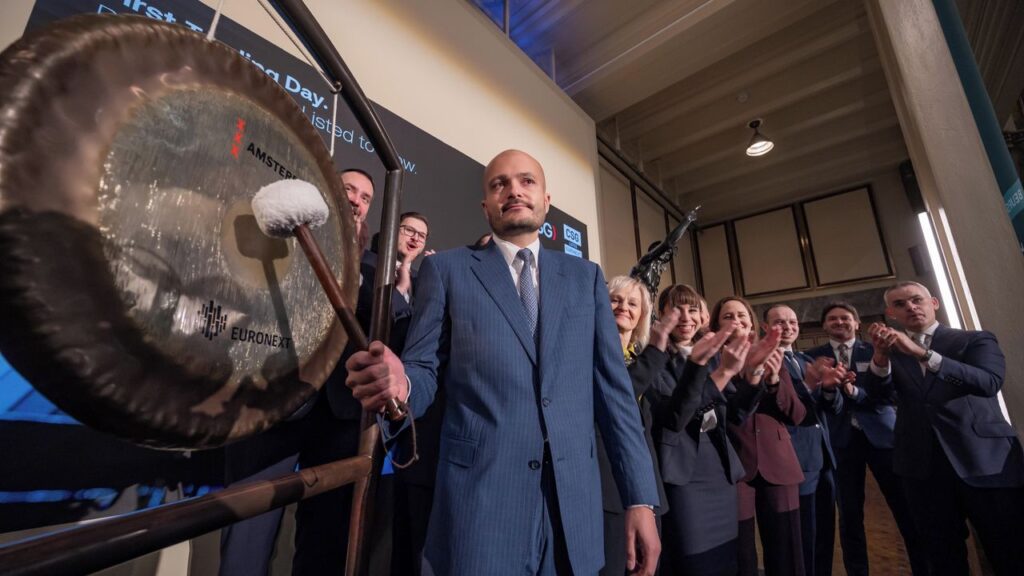
It was a major listing for the Czech company on the Amsterdam Stock Exchange. However, upon closer inspection, it turned out that the story of CSG—which major investment firms had valued at roughly 25 billion euros—had some flaws. When it went public, CSG failed to explicitly state that it also had significant minority shareholders within the group. Moreover, it had come into conflict with the most prominent one. He wants to sell his shares and is asking for tens of billions of crowns for them.
His name is Petr Kratochvíl, he has spent virtually his entire life in the arms industry, and he was there at the birth of the Czechoslovak Group (CSG) as it exists today. In the months leading up to CSG’s IPO, he became embroiled in a major conflict with majority owner Michal Strnad, who took over CSG from his father.
The situation came to a head just before the IPO; according to Kratochvíl, Michal Strnad told minority shareholders that he would not, in fact, list the holding company’s shares on the capital market. “Until the very last moment, he insisted to me that he wouldn’t go public. He offered me a price for my shares that I considered ridiculous. But I didn’t believe him about the IPO, so I kept my shares,” Petr Kratochvíl describes in an interview with Seznam Zprávy.
His position is strong. He holds stakes in the most profitable parts of CSG, which account for the vast majority of the group’s total revenue. Specifically, these include a 10% stake in CSG Land Systems and an 8.9% stake in MSM Group.
Why are you leaving CSG now?
I have been with the group for more than 20 years and was involved in building its key divisions. That made the decision to leave all the more difficult for me. I am leaving CSG due to a loss of trust in the management and the majority shareholder.
Where does this loss of trust stem from?
During 2025, the majority shareholder offered to buy out my 10% stake in the Czech division of CSG LS and my 8.9% stake in the Slovak division of MSM Group for, and I quote, “a maximum of four billion crowns.” Naturally, I did not agree to this price.
I have the right to a buyout based on market value as determined by an expert appraisal. I was also constantly assured by CSG representatives that there would be no IPO (the company’s listing on the stock exchange, ed.).
Can you explain your position as a shareholder with special rights?
I view the shareholder’s special rights as above-standard rights that go beyond the scope of the law and confirm not only my long-term involvement in the group but also the role I played in building its key components. These rights include, for example, the ability to participate in the appointment of statutory bodies through the so-called nomination right, approval of key changes in the company such as amendments to the articles of association, changes to the amount of share capital, changes to the capital structure, or the reorganization of a division, as well as economic rights such as a guaranteed dividend or a right of first refusal regarding the entire division, and so on.
Did you exercise the put option (the majority shareholder must buy back the stake under predetermined conditions, ed.) at CSG Land Systems? When did you inform the group about this? And what price did your valuation set?
Given that this information is already public knowledge, I can confirm that I exercised the put option on January 20, 2026. The value of the stake was determined by an expert appraisal at approximately 34 billion crowns, using a combination of standard valuation methods, DCF, and market comparison.
Do you plan to exercise your option at MSM Group as well?
Given the deep rifts between myself and the majority shareholder, as well as fundamental disagreements regarding the future direction of the divisions, I consider it logical and in everyone’s best interest for my departure to take place as soon as possible. I do not yet have an expert valuation report available. I have also communicated to CSG that I am prepared to negotiate my departure, including the MSM Group division. However, the response was that the majority shareholder does not consider personal negotiations to be expedient at this stage.
Can you comment on the fact that the above was not included in the prospectus prior to the group’s entry into the capital market?
Senior representatives of CSG are responsible for the content of the prospectus. Given that I hold an equity stake in divisions that account for more than 70 percent of the IPO’s value, I would expect the prospectus to transparently address aspects related to minority shareholders’ rights, particularly if they could impact cash flow, for example.
From an investor’s perspective, I consider it standard practice to include, in such a case, qualified estimates of potential costs associated with, for example, the exercise of a put option.