
What was the story behind the report of the planned “Babiš murder”? The police and intelligence services investigated the report on arms dealer Strnad.
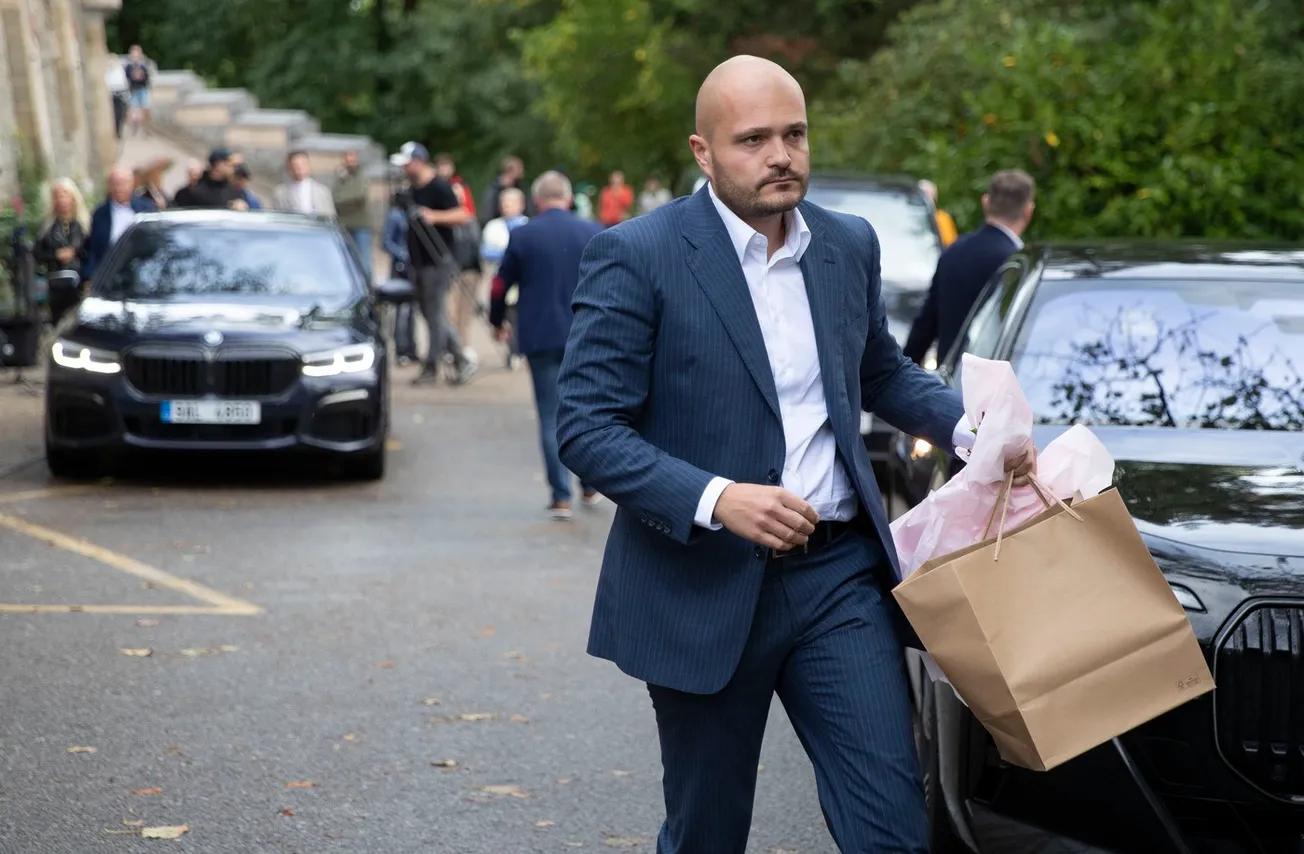
The likely next prime minister, Andrej Babiš (ANO), met with another player in the top business league, Michal Strnad, at the beginning of this year. Relations with influential politicians are absolutely crucial for the most influential Czech arms dealer, but there has been considerable tension between him and Babiš. According to Deník N’s findings, this escalated into a report that was investigated by military intelligence and the police.
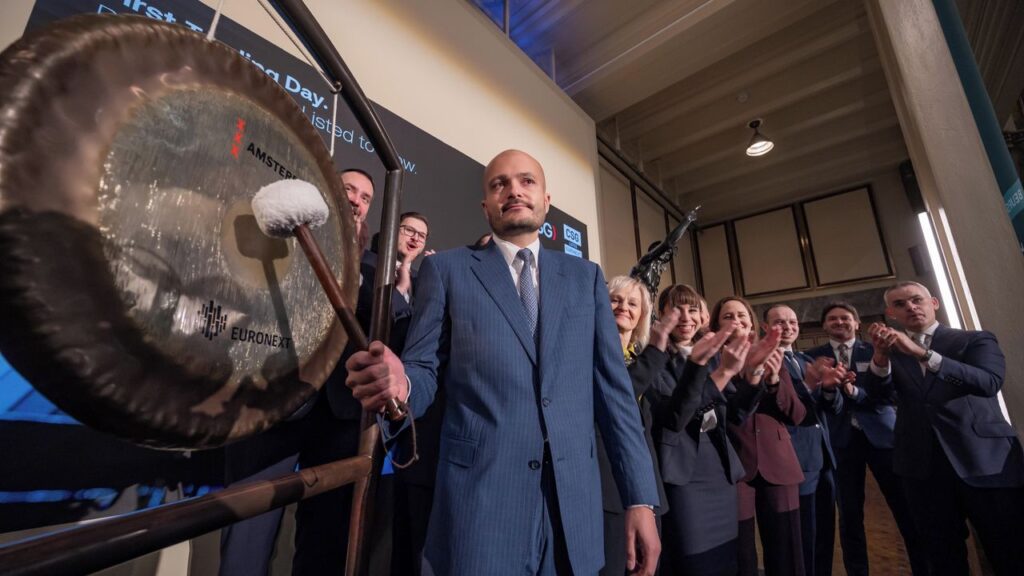
Michal Strnad, head of the largest Czech arms group, Czechoslovak Group (CSG), traveled to Průhonice near Prague in January this year to try to smooth over tense relations with Agrofert owner and likely future Prime Minister Andrej Babiš.
Michal Strnad and his father Jaroslav have always excelled in the skill of getting along with influential political figures regardless of their party affiliation, which is absolutely crucial in their business — not only because of domestic arms contracts, but also because of support from the Czech government abroad and, last but not least, with regard to the ammunition initiative for Ukraine, in which CSG is the main supplier.
Secret meeting
During Miloš Zeman’s era, the Strnads were regular guests at Prague Castle, and they also have influential allies in the circle of current Prime Minister Petr Fiala (ODS).
In the case of Andrej Babiš, however, this was not the case. Relations between the owner of Agrofert and the Strnads have been at a freezing point in recent years, which apparently had both business and political implications.
The two businessmen clash over the sale of Mafra and the chemical plant Synthesia, a major producer of nitrocellulose, a key raw material for the arms industry. Strnad was interested in the company but was unsuccessful; instead, Prague billionaire Karel Pražák bought the businesses from Agrofert.
At the same time, Babiš openly criticizes CSG and uses it in his attacks on the current government. He has called Prime Minister Fiala a “lobbyist” for this arms manufacturer and questions the Czech initiative to supply artillery ammunition to Ukraine, in which Strnad plays a key role. Among other things, the ANO leader said that the initiative is “non-transparent” and that “old and moldy ammunition” is being supplied to Ukraine.
At the aforementioned January meeting, Babiš and Strnad talked in general terms about Czech industry, the mutual relations between the two businessmen, and also touched on the aforementioned sore point—the sale of Synthesia.
Police actions
This is also related to a case that, based on a tip-off, was first investigated by military intelligence and then by detectives from the National Center Against Organized Crime (NCOZ).
After CSG unsuccessfully bid for Synthesia, one of the sources told military intelligence that Strnad was planning to “assassinate” the head of the ANO movement, four high-ranking people familiar with the case told Deník N.
The aforementioned source from the business community did not substantiate his claims with any concrete evidence or recordings. He only said that he had witnessed a conversation in which Strnad had mentioned something like this in the presence of other people. Petr Bartovský, then head of the Military Intelligence Counterintelligence Office, passed on this rather sparse information to his superior, Jan Beroun, director of the service.
However, such a case did not fall within the competence of Military Intelligence, so the secret service passed the information on to detectives from the NCOZ to investigate.
People from the security community explain that even though it was an accusation without evidence, military intelligence wanted to make sure that the case was investigated.
According to information from Deník N, the police conducted the entire case in secret.
The investigators first summoned former Prime Minister Babiš. “Yes, I was there for almost an hour to give my statement. The police asked me if I felt that someone wanted to harm me,” the ANO leader confirmed to Deník N.
“I should have remembered who it could be,” added the former prime minister, saying that he did not mention Michal Strnad’s name. According to him, the police did not disclose the content of the report or the reason why he was summoned.
“I wanted a transcript of my statement, but they didn’t give it to me,” he added. When asked if he had learned what the report contained, he replied, “I heard information about what and who it was about in informal conversations.”
Babiš also had his security detail reinforced at that time.
CSG: This is an information operation
CSG owner Michal Strnad also arrived at the police station. According to information from Deník N, he told investigators right from the start that this was nonsense and described the content of the report as false.
He expressed a similar view through his spokesperson Andrej Čírtek in response to a question from Deník N. “The claim by an anonymous source that Michal Strnad threatened Andrej Babiš with violence in any form is absurd and completely false,” said Čírtek. “The sole purpose of this misinformation is to damage Michal Strnad’s reputation. From our point of view, this is an information operation against CSG,” he added.
Given that the entire investigation was conducted in secret, the NCOZ did not even want to say whether it was still dealing with the case. “In response to your question, I can only say in general that our department does not usually disclose whether it is dealing with a specific matter or not,” wrote department spokesman Jaroslav Ibehej.
According to people familiar with the details of the case, it has been shelved.
Even the current head of Military Intelligence did not want to comment on the case. “No comment,” said Bartovský, who was still dealing with the information as head of the Counterintelligence Office of the Military Intelligence Service. The then head of the Military Intelligence Service, Beroun, also did not want to comment.
Disputes with the defense
The report was filed at a time when the CSG was involved in protracted disputes with Defense Minister Jana Černochová (ODS). This was due to the group’s influence on the defense department, but also because of the extremely close ties between Jaroslav Strnad and his son with former President Miloš Zeman and his advisor Martin Nejedlý.
“Hostile relations” with the minister persisted until the spring of last year, as described by Seznam Zprávy. According to them, at that time, Czech arms manufacturers were pressuring Černochová not to neglect them in the context of military contracts.
And according to the server, Černochová had the most complicated relations with CSG among domestic manufacturers. “I will not comment on specific arms companies, I apologize, please don’t be angry. It would be unfair to them,” she told the website, adding: “I think this company really has a lot of contracts from our department. The amounts are huge. I hate to say it, but even the war in Ukraine is giving this market segment a lot of opportunities. And our department has always tried to support Czech companies, and I will continue to do so.”
The tense relations were not helped by the fact that the Prague-based company Defence Export, founded in 2016 as part of CSG, filed a proposal with the antitrust office to ban the fulfillment of the contract for the purchase of CV90 tracked infantry fighting vehicles. The proceedings ended after the group withdrew its proposal last June.
The fact that relations between CSG and Černochová had changed was particularly evident in the Czech ammunition initiative, in which Strnad’s company plays a key role. Last fall, the minister visited one of Strnad’s companies, Tatra in Kopřivnice. In addition to touring the plant alongside Michal Strnad, she accepted a material donation for the Ukrainian villages of Starý Martinov and Zborov.
According to three people who worked at the Ministry of Defense at the time, relations between Černochová, her office, and CSG were repaired mainly because the company linked to CSG withdrew its proposal from the antitrust office.
Good relations with politicians are absolutely essential for the Strnads, as another recent case shows. Former President Miloš Zeman actively promoted CSG’s interests abroad, and the Strnads regularly visited him and his people.
In 2020, Zeman had considerable influence on the course of a billion-dollar contract for tracked armored vehicles, in which three foreign arms manufacturers were interested. As a key condition of the tender, the winner had to guarantee the participation of a Czech manufacturer.
This was the case with the German arms manufacturer Rheinmetall, which signed a memorandum at Prague Castle to establish a joint venture with CSG. Rheinmetall’s competitors then protested to the Ministry of Defense over concerns that the Castle was favoring one of the participants. All this took place at a time when Lubomír Metnar was head of the Ministry of Defense. His successor, Černochová, canceled the tender, and the government ultimately selected the Swedish arms manufacturer.
In summary
At the beginning of the year, ANO movement leader Andrej Babiš met with Czechoslovak Group owner Michal Strnad. They discussed improving relations.
The entrepreneurs clashed over business at the end of 2023, when Strnad unsuccessfully bid for the Mafra media house and Synthesia.
The Military Intelligence Service then looked into information from its source, according to which Strnad had said he wanted to harm the ex-prime minister.
The police also began investigating the case and summoned both Babiš and Strnad to provide explanations.
The police had no concrete evidence, and Strnad strongly denies the allegations. The CSG group claims that this is an information war.
Author: Zdislava Pokorná