Author: admin

  • A Warning for Investors: How CSG’s Solek Play Unfolded

    A Warning for Investors: How CSG’s Solek Play Unfolded

    Source: https://forbes.cz/solek-prisel-o-sveho-zakladatele-zdenek-sobotka-podlehl-tlaku-dravcu-od-strnada/

    Solek has lost its founder. Sobotka’s billion-dollar debt proved fatal.

    The Czech solar group Solek Holding, which has been building and operating solar parks not only in Europe but also in Chile for fifteen years, is losing its founding father Zdeněk Sobotka after six months of business and legal battles and is slowly heading towards insolvency. Its debt of six billion crowns broke its back.

    Since the fall, when a company linked to arms manufacturer and sixth richest Czech Michal Strnad became Solek’s largest creditor, Sobotka he was unable to secure further financing for the indebted company and at the end of March decided not only to resign from his position as a member of the supervisory board, but also to give up his entire 100% stake.

    “Given that I do not feel the confidence of creditors and other interested parties in the implementation of the reorganization, I have decided, after careful consideration, that the only possible solution is to withdraw from the management of the company and transfer my shares to other members of the company’s board of directors,” Zdeněk Sobotka told Forbes.

    The information also appeared on Friday morning in the group’s collection of documents in the commercial register. The Solek Holding group has lost its founder and, what’s more, there is now a question mark over its future existence.

    Just a year ago, 51-year-old solar entrepreneur Zdeněk Sobotka, as the owner of the Czech group, welcomed a delegation of domestic politicians, businessmen, and journalists to Chile on the occasion of the presentation of his largest project, the Leyda photovoltaic power plant with a capacity of almost 100 megawatts.

    He spoke about how he had won over international banks such as BNP Paribas, Natixis, and even the American investment fund BlackRock for development in Chile, where he has nearly fifty photovoltaic power plants. He also said that in addition to solar power plants, he would focus on the construction of a giant battery storage facility.

    But within a year, everything has changed. His neck was broken by debt, which was exploited by Konvertial SPV, a company with ties to Michal Strnad, owner of the arms group Czechoslovak Group (CSG), which last fall bought a debt from billionaire and MTX group owner Petr Otava worth 817 million crowns, becoming the largest creditor of the entire solar holding company.

    That was when the end began for Zdeněk Sobotka at Soleco, which he had brought to life fifteen years ago and built from scratch to a turnover of CZK 2 billion.

    The reason for the high level of debt was mainly Soleco’s rapid development in recent years, not only in Chile but also in Europe, where it has photovoltaic power plants with a total capacity of several hundred megawatts under construction.

    Zdeněk Sobotka financed the development of projects with external sources, including bonds and bank loans, as well as money from institutional and private investors. The group’s debt rose to a total of six billion crowns. In addition, despite a positive operating profit, the company reported a total loss of more than seven hundred million crowns last year. 

    The group’s debt arose from the need for capital to complete capital-intensive projects, which, in the case of photovoltaic power plants, are only now beginning to generate long-term returns. This is the case, for example, with the recently connected Chilean solar park Leyda.

    With the prospect of financially more prosperous years ahead, Sobotka had been looking since the end of last year for another investor to help him further develop projects in both Chile and Europe.

    However, Chile, which is currently experiencing a huge boom in the construction of solar and wind power plants, has adjusted regulations across the entire market and decided to reduce the purchase price of electricity from solar sources by around 30%. This has, of course, prolonged the return on investment and worsened the outlook for expected cash flow.

    Another milestone came in the middle of last year with the purchase of a CZK 800 million debt from Petr Otava, owner of the MTX Group, by Konvertial SPV, a company belonging to Michal Strnad’s Czechoslovak Group. Sobotka informed him that he wanted to pay off the debt exceeding CZK 800 million.

    Sobotka had to start looking for a new investor for further development and to buy back the receivable in order to avoid the threat of the group being declared insolvent.

    Arms magnate Michal Strnad is known in the business world for his aggressive approach and uncompromising negotiating style. He has consolidated his experience in this area in recent years through transactions in the top global league, such as last year’s acquisition of Kinetic Group from the Vista group. It was the largest arms deal in the modern history of the Czech Republic.

    According to Forbes, Sobotka did not ultimately get the peace of mind he had spoken about to the media in the fall when the entry of a new investor was announced.

    Instead, former CSG Vice-Chairman Miroslav Dorňák was appointed to the board of directors, and Sobotka was later given a contract to sign by Strnad’s lawyer Jan Nekola, which would have stripped Sobotka of most of his stake in exchange for another financial tranche that would keep Soleco’s operations alive.

    In the first half of this year alone, the holding company was supposed to repay bonds worth hundreds of millions of crowns. However, both sides are silent about the events at Solek in recent months.

    “I’m sorry, but CSG is not in a position to comment on the situation at Solek,” CSG spokesman Andrej Čírtek told Forbes earlier in response to questions seeking clarification of the situation. Zdeněk Sobotka then issued only a brief press statement that did not mention the agreement.

    According to Forbes, the agreement stipulated that, in exchange for appointing people to the board of directors and for operational financing, more than 90% of the shares would be transferred to Konvertial SPV, which holds the aforementioned receivable and whose sole shareholder is Michal Strnad’s Czechoslovak Group.

    However, the transfer of shares to Strnad’s people did not take place in the end, and the money for Soleku’s operations was not released. This is evidenced by the fact that Solek was unable to repay a bond installment of CZK 200 million for the first time a month ago, and a few weeks later, Sobotka sent one part of Soleku, Solek Czech Services, into insolvency and proposed its reorganization.

    As Hospodářské noviny was the first to report, the Municipal Court in Prague ruled on Thursday that the company was bankrupt, but at the same time approved the path to reorganization. According to a document in the insolvency register, the provisional creditors’ committee will include, in addition to Konvertial SPV, the Brno-based technology group Seyfor.

    But let’s return to why the transfer of Sobotka’s stake in the company from Strnad’s empire did not take place. The path to controlling Solek was blocked by one of the major foreign creditors, who had to give his consent to the transfer of Sobotka’s stake.

    “In order for the investor to enter the Solek group to the required extent, it was necessary to obtain the consent of a large foreign creditor of the Solek group, which provided the group with significant financial resources to build a portfolio of photovoltaic power plants in Latin America,” Solek stated in a letter to creditors sent on March 28, when Sobotka sent Solek Czech Services into insolvency.

    It is likely that this creditor was BlackRock, which financed Solek’s solar projects in Chile and held Sobotka’s shares as collateral, as Sobotka mentioned last year during the presentation of the Leyda solar park in Chile, which Forbes also attended.

    BlackRock is a seasoned global fund based in New York that knows how to play hardball, and Strnad’s negotiators apparently ran into trouble when negotiating the terms of the transfer. They did not receive approval for it.

    “For this reason, it was not possible to secure the necessary financing for the debtor, or rather the Solek group, which led to the debtor’s current problems with meeting its due obligations,” Solek informed its creditors two weeks ago.

    The decision also meant the end of hope for Sobotka, who was unable to agree with the new investor on the financing needed to continue the company. And so he has now made his most difficult business decision—he has completely withdrawn from Solek by transferring his 100% stake to the members of the original board of directors.

    “As a manager, I have extensive experience in building companies, not restructuring them, so I believe that my move is in the interests of the group’s creditors, partners, and employees, and that it will facilitate the ongoing reorganization process and the possible entry of a strategic partner,” Sobotka said of his departure.

    In April 2025, the entire group broke away from him, and now the battle for it will begin. It is possible that other entities of the holding company will also gradually head into insolvency.

    The main word in the insolvency proceedings will likely be had by Konvertial SPV, the largest creditor with a claim of CZK 817 million, which belongs to Michal Strnad’s CSG. Strnad’s father, Jaroslav Strnad, has a lot of experience with insolvency battles from the past, for example, from the Legios wagon factory.

    According to an assessment by the consulting firm KPMG at the beginning of the year, Soleco’s value should be approximately CZK 1 billion. If the company were to be sold, bondholders would only get back about one-sixth of their invested value. They would have a chance for a higher return if the group underwent reorganization and continued to operate.

    The final fate of the company and the extent to which creditors will be satisfied in the event of bankruptcy will be decided in the coming months.

    The question remains as to what attracts Michal Strnad to Soleco. The group, which designs, builds, and operates photovoltaic power plants, is miles away from the arms industry, in which Strnad has entered the global league in recent years.

    In addition, it straddles Europe and Chile, nine thousand kilometers away, which brings with it great managerial demands and knowledge of the local environment.

    One explanation may be to improve the ESG score of his CSG holding company, to which Soleco’s renewable business would contribute, but a more prosaic reason may simply be that people around Strnad sensed an opportunity to make money.
  • Dangerous ties between CSG and its owner Michal Strnad to Russia

    Dangerous ties between CSG and its owner Michal Strnad to Russia

    Source: https://www.e15.cz/volby/volby-v-usa/vidlak-ktery-nema-rad-ukrajinu-a-strnadovu-csg-kdo-je-trumpuv-novy-viceprezident-vance-1417243

    US presidential candidate Donald Trump at the ongoing Republican convention has finally revealed his choice for vice president, the person who must be prepared to immediately take over if the head of state is unable to perform his duties. It will be Ohio Senator James David Vance, a man with a reputation as controversial as Trump’s

    According to the website Politico, this is bad news for Europe, as it increases the chances that a Republican administration, if victorious in the November elections, will halt military aid to Ukraine.

    A native of the small American town of Middletown, Ohio, he would become one of the youngest and least experienced vice presidents in US history if Trump defeats Joe Biden in the election. At 39, he is exactly half the age of his boss and only entered high politics less than two years ago.

    Unlike Trump, who comes from a wealthy business family, he grew up in a poor working-class environment. Vance’s mother was a drug addict, and his father abandoned him when James David was still a toddler. As a result, he was mostly cared for by his grandparents during his childhood. Nevertheless, he managed to work his way up to a successful career. He studied law at the prestigious Yale University, served in the military in Iraq, and later began working in Silicon Valley for companies involved in venture capital investments in startups.

    J. D. Vance first attracted significant media attention in 2016 when he wrote an autobiography about his difficult adolescence entitled Hillbilly Elegy. The book became a bestseller and was also adapted into a film. It is also interesting to note that Vance was previously a fierce critic of Trump. He called him “an idiot unfit for the presidency” and described his proposals as “immoral and absurd.” He changed his opinion of him after entering politics and is now one of Trump’s most loyal supporters. “I was wrong about Trump. He was a great president. And that’s one of the reasons why I’m working so hard to get him a second term,” Vance said in a recent interview with Fox News.

    Vance has so far presented himself as a classic conservative. For example, he is an opponent of abortion and a supporter of the so-called traditional family. However, what worries Europeans most is his stance on the war in Ukraine. The Republican senator is pushing for an end to US support for the attacked country. In the past, he has called on Ukraine to cede part of its territory to Russia in order to achieve peace, and claimed that “Ukrainian ministers are buying yachts with Western aid.”

    Strnad suspected of ties to Russia

    At the beginning of this year, Vance also came into conflict with the Czech industrial and technology holding company Czechoslovak Group (CSG) owned by businessman Michal Strnad, which supplies ammunition to Ukraine. Specifically, he opposed CSG’s plan to acquire the American ammunition manufacturer Vista Outdoor, accusing Strnad of having close ties to the Kremlin and claiming that the transaction would therefore pose a security risk to the United States.”The Czechoslovak Group has a long history of illegal activity and well-documented ties to American enemies. This transaction poses demonstrable risks to our national security,” the senator wrote in an open letter to US Treasury Secretary Janet Yellen at the time. The Czech company strongly objected to his statements. “This information is unfounded and untrue,” responded Andrej Čírtek, spokesman for Strnad’s holding company. Vance later stated that he was not convinced by the Czech businessman’s arguments. Negotiations on the sale of Vista Outdoor to CSG are still ongoing.

    The election campaign team of incumbent Democratic President Biden warns against Vance as a devoted servant of Trump who will calmly “break the law” for his boss. This is an obvious reference to Trump’s former vice president, Mike Pence. After losing the 2020 election, Pence acknowledged Biden’s victory, which Trump still claims was fraudulent, and refused to support the former president’s efforts to invalidate the election results. Trump and Pence subsequently became political rivals. According to Biden’s campaign, Vance would have acted differently in the same situation.

    Like Trump, Vance is also an advocate of a tough approach towards China, supports the imposition of further sanctions and tariffs on Chinese products, and supports Israel in its war against the terrorist organization Hamas.

  • Control of ammunition production must remain in U.S. hands. CSG represents an unacceptable risk

    Control of ammunition production must remain in U.S. hands. CSG represents an unacceptable risk

    Source: https://www.startribune.com/vista-outdoor-federal-remington-speer-ammunition-czechoslavik-group-csg-jd-vance/600359905

    Conservative lawmakers lead objections to Vista’s deal to sell Federal ammunition to Czech firm

    Pressure being put on Treasury Secretary Janet Yellen and federal panel that must approve foreign investments in U.S. businesses.

    More conservative lawmakers are putting pressure on Treasury Secretary Janet Yellen to quash a Czech company’s bid for Anoka-based Federal and other ammunition brands owned by Vista Outdoor.

    Sen. John Kennedy of Louisiana became the latest Republican to send a letter to Yellen in her capacity as chair of the Committee on Foreign Investment in the United States (CFIUS), which must approve the Prague-based Czechoslovak Group’s plan to buy Vista’s Kinetic unit.

    The mounting criticism — which also includes objections from a national sheriff’s group, Rep. Clay Higgins of Louisiana and Sen. J.D. Vance of Ohio — comes as Vista heads toward a critical shareholder vote on May 16 and as Vista and the Czechoslovak Group (CSG) withdrew and refiled their CFIUS application to get an extension. It also comes as false internet rumors abound, so much so that Jason Vanderbrink, head of Vista’s Kinetic Group, took to YouTube to address them.

    “We have always and will continue to proudly prioritize ammo orders and shipments for our U.S. military and local, state and federal law enforcement agencies,” Vanderbrink said on the video. He also assured viewers that CCI, Federal, Hevi-Shot, Remington and Speer ammunition would remain American-made.

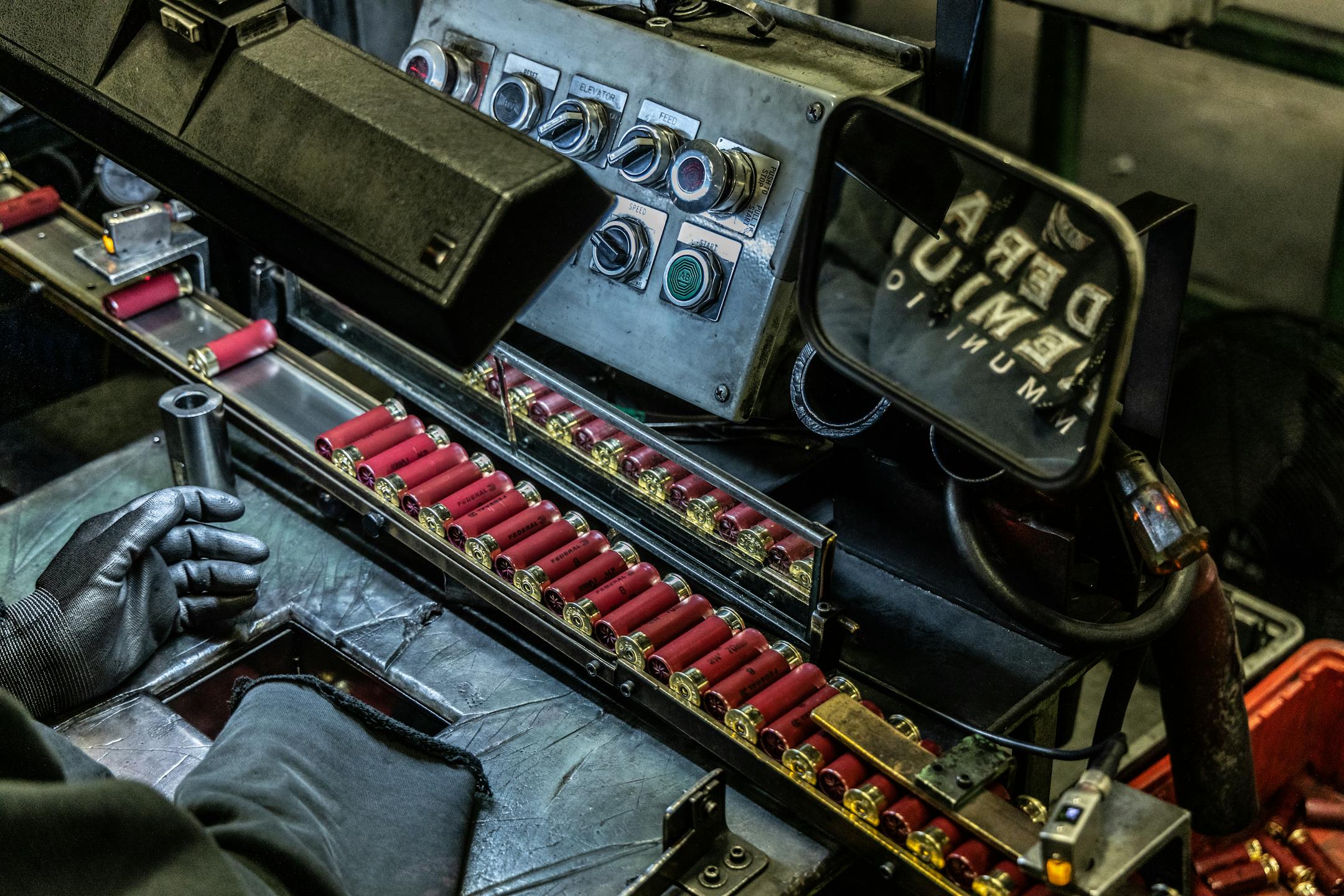
    In a $1.9 billion deal, Vista has agreed to sell to CSG the Kinetic Group, which includes the Federal, Remington, CCI, Hevi-Shot and Speer ammunition businesses. The rest of the company, composed of outdoors product businesses, would then become a new publicly traded company called Revelyst.

    There is a competing $3 billion bid for the entire company by an all-U.S. investment group called MNC Capital, led by former Vista board member Mark Gottfredson.

    MNC Capital, which has made several offers for Vista, has said selling an American ammunition group is a national security issue because the company holds law enforcement and military ammunition contracts.

    A deal with CSG also would concentrate the production of primers with one company. Primers are critical components of ammunition that ignite the propellant and may be the most complex piece of any cartridge. Sources close to MNC Capital say if the CSG deal goes through, it would give the resulting company 70% of the primer market worldwide.

    Because of the reliance on Vista for ammunition, the National Sheriffs’ Association raised objections to CFIUS earlier this month.

    “At this time of heightened global demand, any disruptions in access to affordable and reliable American-made ammunition and primers will hurt sheriffs across the country,” the association said in a letter to CFIUS.

    Higgins, Kennedy and Vance in their letters alluded to connections between CSG Group and Russia or China.

    CSG owner and CEO Michal Strnad said in an open letter to Vance that the senator’s “assessment of us was profoundly mistaken.”

    “CSG is one of the most important private supporters of the Ukrainian military effort, a country to which we have supplied much-needed weapon systems dating back to 2018, well before the outbreak of open Russian aggression,” Strnad said in the letter. “Since the Russian army’s attack on Ukraine, we have supplied the Ukrainian Army — with the help of the government of the Czech Republic and other NATO countries, including the U.S. — over a hundred pieces of heavy equipment and, most importantly, hundreds of thousands of pieces of artillery ammunition, of which we are one of the most important European manufacturers.”

    CSG also is a supplier for the U.S. military and partners with U.S. defense contractors such as General Dynamics and Raytheon.

    “Considering the above, any speculation about the CSG’s connection to the Putin regime should be considered nonsense,” Strnad wrote in his letter. “We understand that the sale of major producers of small caliber ammunition to a foreign company, even if it is a company from a NATO member state that is a close ally of the U.S., attracts well-deserved attention. In today’s global world, however, it is not important which allied country the buying company is based, but what its track record is and what value it can bring to the American ammunition manufacturers associated in the Kinetic Group.”

    On Tuesday, David Štěpán, CSG board member and CEO of its ammunition business, responded to the sheriffs’ association, reiterating the defense industry ties and adding that several of CSG’s businesses hold top NATO security clearances, which would not be possible if it had close ties to Russia or China.

    In a filing with the Securities and Exchange Commission on March 28, Vista said officials remain confident they can meet all the required closing conditions and regulatory approvals, including CFIUS.

    CSG received CFIUS approval for its acquisition of Italian ammunition company Fiocchi Munizioni in 2022. That deal included the Fiocchi America business, which required CFIUS approval.

    A major concern involving any large deal revolves around front-line employment. CSG has said that there would be no major changes to employment if they acquire the sporting products group.

    “CSG has always been supportive of workers, managers and leaders who are committed to their jobs and the company’s vision,” Štěpán said in an email. “We are a technology-based industrial group that understands the importance of a quality workforce and a strong leadership team.”

  • J. D. Vance warns against the sale of Vista Outdoor

    J. D. Vance warns against the sale of Vista Outdoor

    Source: https://forbes.cz/bezpecnost-predevsim-americky-senator-nesouhlasi-s-prodejem-visty-do-rukou-csg/

    Safety first? US senator opposes sale of Vista to CSG

    In an open letter addressed to US Treasury Secretary Janet Yellen, US Senator James David (J. D.) Vance highlights the security risks associated with the sale of American ammunition manufacturer Vista to the Czechoslovak Group. The senator’s main concern is the alleged connections between Michal Strnad‘s group and the Kremlin.

    “Czechoslovak Group has a long history of illegal activity and well-documented ties to American enemies. This transaction poses demonstrable risks to our national security,” J. D. Vance writes in the letter.

    The acquisition was agreed upon by both parties last fall, despite interest from another Czech arms group, Colt CZ, which in the end was unsuccessful in its bid.

    Renowned American shooting brands such as Remington, Federal, CCI, Speer, Alliant Powder, Estate Cartridge, and Hevi-Shot are to fall under the management of the domestic conglomerate. The value of the transaction reached $1.91 billion, or CZK 42.5 billion, which was a record transaction for the group to date.

    “The danger posed by the sale is not due to the size of the transaction or market consolidation. CSG has a long and disturbing history that should raise national security concerns, particularly because of its alleged ties to Russian President Vladimir Putin’s inner circle,” the senator writes.

    The letter further claims that CSG sponsored an exhibition in Moscow designed to help Russian authorities secure European military technology and collaborated with prominent Russian organizations linked to Putin’s regime.

    He also pointed to a recent lawsuit against CSG for its alleged ties to Russian interests, which will be heard by a Delaware court. In addition, American experts and journalists have repeatedly warned about the reckless sale of weapons and accusations against CSG of industrial espionage. The senator also mentioned espionage against the Slovak army and violations of the arms embargo against Azerbaijan.

    At the end of his letter, he mentioned the Foreign Investment Risk Review Modernization Act to ensure that foreign companies do not gain undue influence over industries that are important to US national security. According to him, the sale of Vista is precisely the acquisition for which this amendment was adopted.

    “We cannot afford to have American weapons supplies fall into the wrong hands. Until it is proven that this transaction does not threaten our national security, I respectfully urge you to reject the sale of Vista Outdoor’s Sporting Products to the Czechoslovak Group,” the Republican senator concluded his letter. 

    CSG spokesman Andrej Čírtek responded to Senator J. D. Vance’s letter for Forbes.

    “The information in the letter is unsubstantiated and untrue, and CSG was not contacted for verification. As far as ties to Russia are concerned, we are a private company committed to selling our products to NATO and allied countries in the EU. Some CSG-owned companies have security clearances from both the Czech Republic and NATO. We work with many leading global defense companies, including Raytheon and General Dynamics European Land Systems. Our acquisition of Fiocchci, which manufactures small-caliber ammunition in the US, was successfully reviewed by the Committee on Foreign Investment in the United States (CIFIUS). None of this would be possible for a company with ties to Russia.

    CSG companies have never violated any arms embargo; all exports of military equipment abroad have always been carried out on the basis of duly granted licenses. No proceedings have ever been brought against CSG companies in this regard.

    The lawsuit between SARN and CSG is based on false allegations and was initiated solely to extort CSG and force CSG to make payments to which SARN is not entitled. The so-called final judgment of the Delaware court is neither new nor final. It was issued in 2020, and only now has the amount been confirmed by the court of first instance due to deficiencies in SARN’s claim. This can be appealed, and CSG has already confirmed that it will file an appeal with the Delaware Supreme Court, which may reverse or overturn the decision.

    Furthermore, none of SARN’s allegations about CSG’s ties to Russia were addressed by the court in its ruling (as can be seen from the ruling itself). These allegations were part of a separate claim by SARN, but since SARN was unable to provide any evidence on these matters, the claim was never decided by the court and the litigation in this regard was terminated. On the contrary, CSG provided massive evidence that these allegations are simply nonsensical and completely unfounded.”

  • Vance Flags Alleged Russian Links in Bid to Block CSG’s Vista Deal

    Vance Flags Alleged Russian Links in Bid to Block CSG’s Vista Deal

    Source: https://www.idnes.cz/ekonomika/zahranicni/czechoslovak-group-cesko-usa-csg-republikansky-senator-vance-republikani-zbrane-prodej-vista-outdoor.A240126_155203_eko-zahranicni_remy

    Czech company is a risk, let’s not sell it the arms factory, urges Republican senator

    In a letter, US Republican Senator James Vance asked US Treasury Secretary Janet Yellen to consider suspending the sale of the Sporting Products ammunition division of US arms manufacturer Vista Outdoor to Czech company Czechoslovak Group (CSG).

    The senator cites possible security risks, including alleged ties to Russia. CSG considers the information to be unfounded and untrue and has denied any links to Russian authorities.

    “(CSG) is a company with a long history of unfair practices and well-documented ties to entities hostile to the US,” the senator said in a letter, calling on Yellen to assess the potential risks. “This transaction poses obvious risks to our national security,” Vance wrote.

    Andrej Čírtek, spokesperson for the Czech holding company, told ČTK that CSG is “a private company committed to selling its products to NATO and EU partner countries” and “cooperates with many leading global defense companies, including (US) Raytheon and General Dynamics European Land Systems.”

    The industrial and technology holding company CSG announced the signing of a $1.91 billion (CZK 42.5 billion) acquisition agreement with Vista Outdoor last October. According to CSG representatives, Vista Outdoor is one of the world’s largest manufacturers of small-caliber ammunition, including brands such as Remington, Federal, CCI, and Speer.

    “The risks are not related to the size of the transaction,” the senator continues, “CSG has a long and troubling history, most notably its alleged ties to Russian President Vladimir Putin’s inner circle… CSG sponsored a parade in Moscow to help Russian authorities obtain European military technology.”

    Vance’s criticism is somewhat surprising given that he sympathizes with former President and apparent Republican candidate for the highest office in the US, Donald Trump. Trump takes a much more lenient stance toward Russia and Putin.

    The letter goes on to mention violations of the embargo on arms sales to Azerbaijan. It refers to a report by the Organized Crime and Corruption Reporting Project (OCCRP) that 54 Tatra 815 vehicles were delivered to Azerbaijan. These were first sold to Israel, from where they were transported to Slovakia, where howitzers and rocket launchers were mounted on them, and then returned to Israel.

    From there, however, they ended up in Azerbaijan, which then used them in the war against Armenia, according to the website Novinky.cz. CSG also denied violating the embargo, stating that its exports were always carried out on the basis of duly granted licenses.

    “Our acquisition of Fiocchi, which manufactures small-caliber ammunition in the US, has successfully passed the review of the US Foreign Investment Committee. Some companies owned by CSG have security clearance from both the Czech Republic and NATO. None of this would be possible for a company with ties to Russia,” said CSG spokesman Čírtek.