Author: admin

  • WHY THE LARGEST MILITARY IPO IN EUROPEAN HISTORY IS COMBUSTING

    WHY THE LARGEST MILITARY IPO IN EUROPEAN HISTORY IS COMBUSTING

    Source: https://hntrbrk.com/csg/

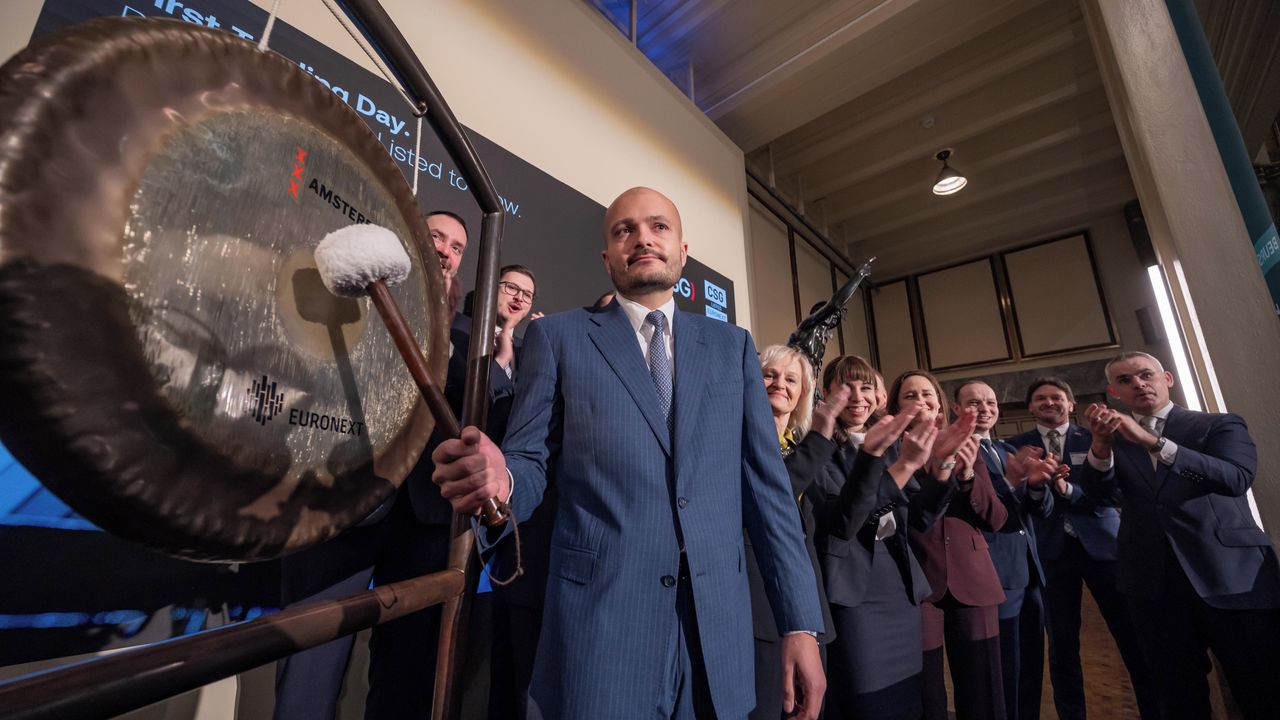
    The article describes CSG as a company that went public on the Amsterdam Stock Exchange in early 2026 with an exceptionally strong investment story: European nations are arming themselves, Ukraine is consuming massive amounts of ammunition, and CSG presents itself as one of the key European players capable of supplying medium- and large-caliber ammunition. According to Hunterbrook, however, investors may have bought something different from what was suggested to them—not a fully vertically integrated manufacturer like Rheinmetall, but a group whose significant portion of revenue may come from the purchase, refurbishment, and resale of older ammunition.
    The main concern relates to production capacity. According to the article, the prospectus stated a total capacity of roughly 630,000 rounds of medium- and large-caliber ammunition per year and also claimed that 80% of production consists of 155mm ammunition. Hunterbrook concludes from this that investors may have been led to believe that CSG produces roughly half a million rounds of 155mm ammunition per year. However, the authors claim that during their own reconstruction of the production trail, they identified only one factory capable of the final assembly of this ammunition and estimate its production to be significantly lower. When asked, CSG refused to disclose the breakdown of capacities by ammunition type and stated that it does not typically disclose such information.
    Another issue is the sustainability of the business model. According to Hunterbrook, if a significant portion of the business is based on recommissioning—that is, refurbishing and returning older munitions to service—CSG’s growth depends on the availability of global stocks of usable old munitions. The article argues that these stocks may be dwindling, while demand from Ukraine and NATO remains high. The authors also note that the so-called Czech ammunition initiative may face political and financial pressure, which could weaken one of the key channels through which ammunition reaches Ukraine.
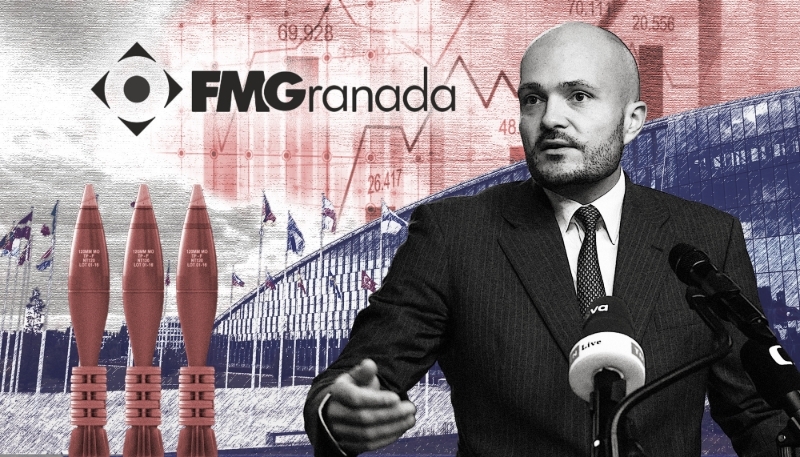
    A significant portion of the text also addresses issues surrounding the IPO’s transparency. Hunterbrook notes that shortly after the IPO, information emerged about a Slovak framework contract worth up to 58 billion euros, in which—according to other investigative media outlets—the participation of the countries mentioned by the Slovak defense minister had not been confirmed. The article further describes the suspension of the Spanish FMG factory by NATO’s procurement agency due to alleged “sanctionable practices” and a dispute with Petr Kratochvíl, a minority shareholder with special rights, who reportedly demanded the buyout of his stake for 1.4 billion euros. According to Hunterbrook, these matters were not clearly and comprehensively described in the prospectus.

  • Interview: CSG’s Shadow Deals and Broken Promises

    Interview: CSG’s Shadow Deals and Broken Promises

    Source: https://www.seznamzpravy.cz/clanek/domaci-kauzy-ztrata-duvery-skryty-spoluvlastnik-popisuje-proc-chce-vykoupeni-z-csg-302047

    “Loss of Trust.” A silent partner explains why he wants to buy out of CSG

    Petr Kratochvíl is a major shareholder in two key companies within the CSG Group. The majority owner, Michal Strnad, reportedly offered him “a maximum of four billion” for his shares. Kratochvíl is now demanding much more.

    It was a major listing for the Czech company on the Amsterdam Stock Exchange. However, upon closer inspection, it turned out that the story of CSG—which major investment firms had valued at roughly 25 billion euros—had some flaws. When it went public, CSG failed to explicitly state that it also had significant minority shareholders within the group. Moreover, it had come into conflict with the most prominent one. He wants to sell his shares and is asking for tens of billions of crowns for them.

    His name is Petr Kratochvíl, he has spent virtually his entire life in the arms industry, and he was there at the birth of the Czechoslovak Group (CSG) as it exists today. In the months leading up to CSG’s IPO, he became embroiled in a major conflict with majority owner Michal Strnad, who took over CSG from his father.

    The situation came to a head just before the IPO; according to Kratochvíl, Michal Strnad told minority shareholders that he would not, in fact, list the holding company’s shares on the capital market. “Until the very last moment, he insisted to me that he wouldn’t go public. He offered me a price for my shares that I considered ridiculous. But I didn’t believe him about the IPO, so I kept my shares,” Petr Kratochvíl describes in an interview with Seznam Zprávy.

    His position is strong. He holds stakes in the most profitable parts of CSG, which account for the vast majority of the group’s total revenue. Specifically, these include a 10% stake in CSG Land Systems and an 8.9% stake in MSM Group.

    Why are you leaving CSG now?

    I have been with the group for more than 20 years and was involved in building its key divisions. That made the decision to leave all the more difficult for me. I am leaving CSG due to a loss of trust in the management and the majority shareholder.

    Where does this loss of trust stem from?

    During 2025, the majority shareholder offered to buy out my 10% stake in the Czech division of CSG LS and my 8.9% stake in the Slovak division of MSM Group for, and I quote, “a maximum of four billion crowns.” Naturally, I did not agree to this price.

    I have the right to a buyout based on market value as determined by an expert appraisal. I was also constantly assured by CSG representatives that there would be no IPO (the company’s listing on the stock exchange, ed.).

    Can you explain your position as a shareholder with special rights?

    I view the shareholder’s special rights as above-standard rights that go beyond the scope of the law and confirm not only my long-term involvement in the group but also the role I played in building its key components. These rights include, for example, the ability to participate in the appointment of statutory bodies through the so-called nomination right, approval of key changes in the company such as amendments to the articles of association, changes to the amount of share capital, changes to the capital structure, or the reorganization of a division, as well as economic rights such as a guaranteed dividend or a right of first refusal regarding the entire division, and so on.

    Did you exercise the put option (the majority shareholder must buy back the stake under predetermined conditions, ed.) at CSG Land Systems? When did you inform the group about this? And what price did your valuation set?

    Given that this information is already public knowledge, I can confirm that I exercised the put option on January 20, 2026. The value of the stake was determined by an expert appraisal at approximately 34 billion crowns, using a combination of standard valuation methods, DCF, and market comparison.

    Do you plan to exercise your option at MSM Group as well?

    Given the deep rifts between myself and the majority shareholder, as well as fundamental disagreements regarding the future direction of the divisions, I consider it logical and in everyone’s best interest for my departure to take place as soon as possible. I do not yet have an expert valuation report available. I have also communicated to CSG that I am prepared to negotiate my departure, including the MSM Group division. However, the response was that the majority shareholder does not consider personal negotiations to be expedient at this stage.

    Can you comment on the fact that the above was not included in the prospectus prior to the group’s entry into the capital market?

    Senior representatives of CSG are responsible for the content of the prospectus. Given that I hold an equity stake in divisions that account for more than 70 percent of the IPO’s value, I would expect the prospectus to transparently address aspects related to minority shareholders’ rights, particularly if they could impact cash flow, for example.

    From an investor’s perspective, I consider it standard practice to include, in such a case, qualified estimates of potential costs associated with, for example, the exercise of a put option.

  • Hidden Stakeholder: Why Europe’s CSG Raises Red Flags for America’s Defense Industry

    Hidden Stakeholder: Why Europe’s CSG Raises Red Flags for America’s Defense Industry

    Source: https://www.seznamzpravy.cz/clanek/domaci-kauzy-prekvapeni-po-vstupu-na-burzu-skryty-spoluvlastnik-csg-zada-desitky-miliard-301969

    A surprise after the IPO. CSG’s hidden co-owner is demanding tens of billions

    An influential minority shareholder in a key division of CSG requested the buyout of his stake prior to the company’s IPO. He values it at nearly 35 billion crowns. However, the investor prospectus made no mention of his extensive rights or this request.

    The story of a successful IPO, which gave rise to the richest Czech and the world’s richest arms manufacturer, is beginning to show some cracks.

    Michal Strnad, whose arms manufacturing group CSG went public on the Amsterdam Stock Exchange on January 23 of this year, became one of the most closely watched entrepreneurs at the start of the year. Investment banks valued his defense group at 25 billion euros. That is more than the value of the semi-state-owned company ČEZ, until then the most valuable Czech firm on the stock market. At the same time, it was one of the largest IPOs—that is, initial public offerings—in the history of the European defense industry. In the first few weeks, investors drove the company’s valuation even higher, to more than 30 billion euros, as they bet on a continuing arms boom in connection with the war in Ukraine and the need for massive rearmament in Europe.

    However, as findings by Seznam Zprávy show, a significant surprise may await investors.

    Shortly before going public, Terzo Company—owned by entrepreneur Petr Kratochvíl, one of the long-time managers and founders of the CSG Group—began exercising its right to sell its stake in a key part of the group. 

    “Given that this information is already public knowledge, I can confirm that I exercised the put option on January 20,” Petr Kratochvíl told Seznam Zprávy.

    A put option is the right to compel a majority shareholder to buy out a minority co-owner’s stake at a market price determined by an expert appraisal.

    The decision was up to Kratochvíl—he chose to leave, and the group must buy out his stake according to established procedures.

    This was not a marginal part of the CSG group. Kratochvíl holds a stake in the most significant division, which generates the majority of the group’s profits. The price he is demanding reflects this: nearly 35 billion crowns.

    When asked by Seznam Zprávy, Kratochvíl himself stated that he cannot comment on matters regarding his shares due to confidentiality. “I can only confirm that, due to critical disagreements with the majority shareholder and a breach of trust, I plan to reduce my involvement in the CSG Group. In this context, I have taken the appropriate steps,” he said without providing further details.

    The CSG Group disputes the exercise of the put option prior to the IPO. In its statement, it noted that it cannot comment on specific shareholders, but considers the notification of the option’s exercise and, in particular, the delivery of the expert opinion to be the legally relevant triggers for the entire process—which, according to CSG, did not occur prior to the IPO.

    At the same time, company spokesperson Andrej Čírtek stated that even if the initial steps prior to the IPO had taken place, he believes there was no obligation to notify investors.

    A Game of Big Money

    The biggest dispute will center on the price. After all, there is a lot of money at stake.

    Kratochvíl is a minority co-owner of two key parts of the group: a 10% stake in the Czech CSG Land Systems, which brings together manufacturers of heavy military equipment and ammunition in the Czech Republic, and just under 9% of the Slovak MSM Group, which operates a network of arms manufacturers specializing in artillery ammunition. Together, these two companies form the CSG Defence division, which accounted for three-quarters of the entire group’s revenue in the first three quarters of 2025.

    Kratochvíl has filed a request to buy out his stake only in relation to the Czech CSG Land Systems; he has not yet requested a buyout in the MSM Group.

    The main asset of CSG Land Systems is Excalibur Army, which reported revenues of over 65 billion crowns and pre-tax profit of over 14 billion crowns in 2024—both record figures in the company’s history. More recent data is not yet available, but further growth is expected.

    According to a source at CSG, Kratochvíl submitted an expert appraisal a few days after the IPO: his 10% stake in CSG Land Systems is reportedly valued at nearly 35 billion crowns, or approximately 1.4 billion euros.

    CSG Defence, controlled by Strnad, may, as the majority owner, submit a counterproposal with its own valuation. 

    If the appraisals differ significantly, a third, independent valuation will decide the matter.

    The CSG Group rejects Kratochvíl’s valuation. It claims that approximately a year ago, the minority shareholder had another expert appraisal prepared for the same stake, which set its value at roughly one-tenth of that figure—that is, approximately 3.4 billion crowns. However, it is not clear from the statement on what date and for what purpose such an appraisal was prepared. CSG Group spokesperson Čírtek also noted that no final and binding price for the minority stake being purchased has been set yet.

    The relatively high price demanded by Kratochvíl is supported by the very fact of the IPO: investment banks valued the entire group at 25 billion euros, with the CSG Defence division forming its core.

    The CSG prospectus—a document published prior to the IPO, on the basis of which investors decide whether to purchase shares—does not contain this information: it does not mention the existence of a minority shareholder with such extensive rights, nor his request to sell his stake. Neither before nor after the IPO.

    Why does this matter?

    Any company seeking to go public must provide investors with a detailed description of its structure, performance, and risks. This is precisely the purpose of the prospectus. It is approved by the regulator—in CSG’s case, the Dutch AFM, which oversees the Amsterdam-based Euronext stock exchange. Based on this document, investors decide whether to buy shares and at what price.

    The CSG prospectus makes no mention of Kratochvíl’s existence as a minority shareholder with extraordinary rights. It contains neither information about the content of the shareholders’ agreement granting him these rights nor the fact that a request was made to buy out his stake.

    The CSG Group rejects this as an omission. It claims that the prospectus transparently described the group’s structure, including the existence of minority shareholders, and explicitly noted that these shareholders may have interests different from those of the company and that any disagreements with them could negatively impact the companies concerned. According to CSG, there was no legal basis for naming a specific minority shareholder, neither Terzo Company nor Petr Kratochvíl. According to the group’s statement, the prospectus was consulted throughout its preparation with legal advisors and the four largest global banks, which had access to the complete contractual documentation.

    “Generally speaking, if the prospectus were missing material information or contained misleading information that led to losses for investors, then investors who felt aggrieved would have the option to seek damages,” a source from the Prague Stock Exchange told Seznam Zprávy.

    When asked by Seznam Zprávy whether it was aware of the existence of extraordinary rights and the request to repurchase the stake, the Dutch regulator AFM had not responded by the time of publication.

    Hidden Co-Owner

    Before going public, Michal Strnad was the sole owner of the holding company overseeing the entire CSG group. However, he did not necessarily have to be the sole shareholder in the individual companies comprising the defense conglomerate—and, as it now turns out, he was not.

    In CSG Land Systems, Kratochvíl holds a 10% stake through his company Terzo Company, and in MSM Group, he holds just under 9% as an individual. Kratochvíl and his company are listed as shareholders in the latest available entries in the register of beneficial owners of both companies.

    However, his position is not that of a typical minority shareholder. According to CSG Land Systems’ articles of association, available in the Czech Commercial Register, Kratochvíl is a long-term holder of a special share with extraordinary rights. A number of key decisions also require the consent of all shareholders. Kratochvíl can therefore effectively block them. 

    Furthermore, the articles of association explicitly preclude the majority shareholder from squeezing him out without his consent.

    A source from the CSG group confirmed to Seznam Zprávy that Kratochvíl retained his shares prior to the IPO, unlike some other minority shareholders. According to the same source, in addition to the public articles of association, there are non-public shareholder agreements that grant him additional rights: among other things, the ability to nominate the chairman of the board of directors of CSG Land Systems or a guarantee of market price when buying back shares. He is said to have similar rights in the Slovak MSM Group as well.

    Kratochvíl declined to comment on questions regarding his shares, citing confidentiality. However, he denied responsibility for the content of the IPO prospectus. “CSG’s senior representatives are responsible for the content of the prospectus. I had access to the same information regarding the IPO at the same time as the public,” he stated. When asked whether this was information that should be of interest to investors, he replied: “As an investor in the capital market, I would naturally have an interest in such information so that I could make an informed investment decision.”

    A Liability in the Billions

    The minority shareholder’s claim for payment is currently directed at CSG Defence, a key component of the entire group controlled by Michal Strnad. The final amount cannot be predicted—it will be determined by expert appraisals. However, the claimed 1.4 billion euros represents roughly six percent of the CSG group’s market valuation at the time of its IPO. 

    If the liability were to be paid out on such a scale, it would be a significant item even from the perspective of the entire group.

    The CSG Group disagrees with this assessment. It states that it respects all standard rights of minority shareholders and upholds the principles of protecting minority owners.

    At the same time, it assures that as soon as a legal obligation arises to disclose any information concerning the CSG Group, it will comply immediately.

    In any case, the existence of a previously undisclosed shareholder agreement and the very exercise of a previously unmentioned option for a significant stake in a key company represent a surprising aspect of the arms empire’s entry into the capital market.

    Strnad’s Financial Operations

    In recent months, Seznam Zprávy has reported that Strnad had an established procedure for concealing financial operations that were not meant to be seen.

    The crowdfunding platform FinGood is a business venture in which billionaire and arms manufacturer Michal Strnad is involved and through which he exercises his influence.

    For example, through Car Service Group CZ, operating under the Cash4Car brand, former Czech Railways director Václav Nebeský acquired a luxury Mercedes at a favorable price, with Strnad orchestrating the deal behind the scenes. Through this pawnshop, he also secretly sponsored the campaign of former President Miloš Zeman. He also lent money to the company. Millions in cash flowed back to Strnad.

  • CSG Accused of Hiding NATO Corruption Probe Ahead of IPO

    CSG Accused of Hiding NATO Corruption Probe Ahead of IPO

    Source: https://www.ftm.eu/articles/europe-defence-giant-czechoslovak-group-csg-entangled-nato-corruption-scandal

    European defence giant entangled in NATO corruption scandal

    Czechoslovak Group (CSG) recently celebrated the largest-ever initial public offering for a defence company. But it failed to disclose that one of its subsidiaries had been suspended by NATO as part of a major corruption investigation. Investors told Follow the Money that CSG should have made the information public before its listing in Amsterdam.

    A major European defence company has been embroiled in a corruption scandal after NATO suspended one of its subsidiaries, Follow the Money and its media partners can reveal.

    Czechoslovak Group (CSG) made headlines in January when it listed in Amsterdam, achieving the world’s largest-ever initial public offering for a defence firm.

    However, the company failed to disclose that its Spanish subsidiary – Fábrica de Municiones de Granada (FMG) – had been blacklisted by the NATO Support and Procurement Agency (NSPA) last July.

    The NSPA is at the heart of a major graft investigation, with current and former employees suspected of accepting bribes.

    Kickbacks worth potentially millions of euros were allegedly paid by defence contractors or middlemen to land NSPA contracts to supply the military alliance and its 32 member states.

    Internal documents obtained by Follow the Money, La Lettre, Le Soir, and Knack show that FMG – an ammunition manufacturer based in southern Spain – was temporarily barred from bidding for new contracts in July as part of the corruption probe.

    When the suspension took effect, FMG held at least three NSPA contracts for tank artillery. The ban was originally meant to last four months, but has since been extended indefinitely.

    Investors left in the dark

    There was no mention of FMG’s suspension in the 728-page prospectus that CSG published days before it went public in January.

    Under EU financial regulations, even the threat of a criminal investigation requires companies to inform investors if the information is considered of material importance.

    The issue is whether the investigation and temporary suspension of FMG could be significant enough to influence investors’ decisions on buying CSG shares.

    It’s not just the possible financial consequences that should be taken into account, but also the potential reputational damage, according to several experts in the field.

    The Dutch shareholders association VEB said that investors “would have liked to have known in advance” about FMG’s suspension.

    That view was echoed by two investors who spoke to Follow the Money on condition of anonymity due to the sensitivity of the matter.

    In response to emailed questions, CSG spokesman Andrej Čírtek said that the suspension was “unfounded”.

    Čírtek said that FMG had conducted a thorough forensic legal audit of all its dealings with the NSPA in recent years and “found no reason whatsoever to conclude there had been any irregularities or unlawful dealings”.

    “To the best of FMG’s knowledge and based on the internal audit results, FMG believes it has done nothing wrong, committed no wrongdoing, or taken any part in any uncompliant activities, that could have led to said suspension,” he added.

    Reputational risk

    Founded in 2019, FMG has its roots in the centuries-old tradition of ammunition production in the southern Spanish city of Granada.

    The company was taken over by the Slovakian MSM Group – part of CSG – in 2020.

    FMG produces large-calibre shells for artillery and tanks – ammunition in high demand since Russia’s full-scale invasion of Ukraine in February 2022. As a result, its workforce has reportedly tripled in recent years. In 2024, FMG reported a turnover of €163 million and a profit of €22 million.

    On 31 July 2025, the NSPA suspended FMG along with Israel’s largest defence company, Elbit Systems.

    An internal letter by a senior NSPA manager – a copy of which was seen by Follow the Money – said there were “serious allegations indicating that it is likely the suppliers engaged in sanctionable practices, including irregularities in the award of contracts”.

    Security and Defence

    Europe is investing heavily to ramp up its security. FTM takes a close look at how the money is being spent.

    CSG told Follow the Money that its repeated inquiries to the NSPA about the suspension of FMG have gone unanswered, leaving the company to rely on media reports for information.

    Despite the blacklisting, the Spanish firm can still sell directly to individual NATO member states. Those countries spend much more on defence than the NSPA itself.

    “Given the current market situation, and the fact that the NSPA is only one of many FMG customers, the suspension has had no impact on the financial situation or business prospects of FMG [or its parent company CSG],” said Čírtek of CSG.

    However, he said that CSG was concerned about the impact the suspension could have on its reputation.

    Despite repeated requests, NATO and the Belgian Public Prosecutor’s Office – which is investigating the corruption case – have not commented on FMG’s blacklisting.

    The findings follow last year’s investigation by Follow the Money and media partners, which uncovered the scale of the scandal.

    It revealed how two US probes into the NSPA were abruptly and inexplicably dropped in July, raising concerns about political interference.

    Separately, leaked documents exposed internal turmoil at the procurement agency, with senior officials having accused NSPA General Manager Stacy Cummings of favouritism, failing to investigate corruption, and unduly interfering in their work.

  • NATO Corruption Scandal Widens: CSG Subsidiary Suspended Over Bribery Allegations

    NATO Corruption Scandal Widens: CSG Subsidiary Suspended Over Bribery Allegations

    Source: https://www.lalettre.fr/fr/entreprises_defense-et-aeronautique/2026/03/10/nato-suspends-top-spanish-arms-firm-over-irregularities,110676732-fac

    NATO suspends top Spanish arms firm over “irregularities”

    The alliance’s procurement arm suspended Fábrica de Municiones de Granada last summer over suspected irregularities in ammunition contracts, according to an investigation by La Lettre and its partners. Its owner, the giant Czechoslovak Group, did not deem it necessary to disclose this awkward fact at the time of its spectacular stock market flotation in January.

     Publié le 10/03/2026 à 6h20 Lecture 4 minutes  Matthieu Fauroux

    Michal Strnad, chairman of Czechoslovak Group, parent company of Fábrica de Municiones de Granada.

    Michal Strnad, chairman of Czechoslovak Group, parent company of Fábrica de Municiones de Granada. © Photomontage Indigo Publications – Piroschka van de Wouww/Reuters//Simon Wohlfahrt/AFP//FMG//sittipong phokawattana/iStock

    Fábrica de Municiones de Granada (FMG), the Spanish specialist in tank and mortar ammunition, was suspended on 31 July by the NATO Support and Procurement Agency (NSPA). This highly unusual move cuts FMG off from arms markets in the alliance’s member states.  According to documents seen by La Lettre and its Dutch and Belgian media partners Follow the Money, Le Soir and Knack, the decision was prompted by suspicions of “irregularities” across several of the agency’s programmes. The NSPA procured nearly €10bn in arms for NATO forces last year.

    Since February 2025, a series of major defence contracts has been tainted by multiple corruption cases that have led to the arrest of around half a dozen intermediaries, agents and former NATO officials in Switzerland, the Netherlands and Italy (LL, 20/10/25). Many NSPA contracts are currently under investigation by Belgian, Luxembourgish and US prosecutors, and relate to ammunition, a market that has surged across Europe since Russia’s offensive in Ukraine began.

    According to our sources, the three FMG contracts under scrutiny involve 120mm shells, a calibre used in French Leclerc, American Abrams and German Leopard 2 tanks. The procedure barring the Spanish company from NSPA tenders was issued on the same day as one targeting Elbit Systems, the Israeli defence giant, one of whose intermediaries is currently being sought by Belgian prosecutors (LL, 08/12/25).

    ‘Sanctionable practices’

    On 31 July, Céline Danielli, the head of the NSPA’s ammunitions programme, wrote to NATO member states to explain that the two suspensions followed “the emergence of serious allegations indicating that it is likely the suppliers engaged in sanctionable practices, including irregularities in the award of contracts”.

    At the time, Danielli advised member states to contact the Belgian federal police’s anti-corruption unit for further details, before closing her letter on an unsettling note: “It is possible that other companies might undergo the same process in the near future.”

    FMG is well known in the defence industry. It posted €163m in revenue in 2024 and is a major customer of French propellant manufacturer Eurenco, with which it forged a partnership in June 2022, announced in Paris at the Eurosatory trade show. Spain’s second-largest ammunition maker made headlines on 23 January, when its parent company, Czechoslovak Group (CSG), completed a high-profile IPO on the Amsterdam stock exchange. The Czech munitions heavyweight, which also owns the MSM Group, Fiocchi and Remington and sold more than €6bn of arms and ammunition in 2025, caught the eye of US fund BlackRock and retail investors alike. Shares in the company, led by Michal Strnad, surged by a sector-record 31.4% on the first day of trading, giving it a market capitalisation of $35bn.

    A scandal kept under wraps

    In the prospectus issued ahead of the listing, CSG made no mention of its Spanish subsidiary’s suspension by NATO in connection with possible “fraudulent activities.” European law requires a company to inform investors even of a threat of criminal investigation if it constitutes “material to an investor.”

    A CSG spokesman said that “based on the internal audit results, FMG believes it has done nothing wrong, committed no wrongdoing, or taken any part in any uncompliant activities, that could have led to said suspension” by NATO. The Czech company does, however, offer an explanation: “FMG believes the suspension could be linked to an investigation by the NSPA and Belgian authorities of one particular NSPA case officer.” The group maintains that the suspension has had no significant financial impact on its operations.

    Backdoor lobbying

    On 11 December, the NSPA acknowledged on its website that it had “temporarily suspended companies in NATO and non-NATO Nations based on ongoing national investigations or NSPA investigative efforts, where preliminary evidence suggests sanctionable practices have taken place”.

    The matter was deemed serious enough to warrant a formal communication to the North Atlantic Council. Yet the agency has never made public the list or status of the companies affected. Several of them have quietly launched lobbying efforts targeting agency management and member-state capitals in a bid to regain access to NATO tenders.

    According to our sources, FMG sought to persuade the agency’s leadership of its good faith, but has so far failed to get off NSPA’s list of suspended companies. Global Defense Logistics, another suspended firm – whose maritime fuel contracts are the subject of US and Romanian investigations (LL, 20/10/25) – has also contacted each member state’s representative at the NSPA to make the case for its reinstatement.

    NATO programmes under strain

    The suspensions are complicating the delivery of NATO programmes at a time when member states’ orders are rising amid a broader European rearmament drive. In an internal letter dated 15 December 2025, NSPA director general Stacy Cummings acknowledged having “taken steps to ensure that the Agency’s ability to deliver operational support from previous or current contracts is not affected.”

    As La Lettre and its partners have reported, Elbit Systems is also caught up in the suspensions (LL, 08/12/25). The Haifa-based company is a key supplier to the armed forces of NATO members, delivering anti-missile systems for Airbus’s A330 MRTT tanker, Embraer’s C-390 transport aircraft and the A330 presidential jet used by Emmanuel Macron, as well as small-calibre ammunition to the French military. Yet as with all other companies suspended by the NSPA, nothing prevents Elbit Systems or FMG from selling their weapons directly to states, bypassing the alliance’s tender process entirely. Multiple approaches to NATO and to the Belgian federal prosecutor failed to elicit responses to our questions.

  • Police Arrest VC Linked to CSG’s Defense Tech Investments, Raising New Questions Around Strnad’s Expanding Network

    Police Arrest VC Linked to CSG’s Defense Tech Investments, Raising New Questions Around Strnad’s Expanding Network

    Source: https://www.seznamzpravy.cz/clanek/ekonomika-firmy-policie-zadrzela-sefa-startupove-firmy-s-niz-investuje-i-zbrojar-strnad-301214

    Police arrest head of startup company in which arms manufacturer Strnad also invests

    Presto Ventures, a company investing in startups, will temporarily operate without its founder Přemysl Rubeš. He has been detained by the police, but according to the company, the reason is not related to business. The arms manufacturer CSG also invests with Presto Ventures.

    On Monday, police arrested Přemysl Rubeš, founder and managing partner of startup company Presto Ventures. According to statements by Rubeš’s colleagues, the police action was not related to Presto Ventures. Billionaire Michal Strnad’s CSG group also invests in this company through Presto Tech Horizons.

    According to Rubeš’s partner at Presto Ventures, Vojtěch Roček, Rubeš had been suffering from health and mental problems recently.

    “This culminated on Monday when people close to him (Přemysl Rubeš, ed.) called the police for his own safety. Presto Tech Horizons is not affected by this in any way, and at Presto Ventures we will look for ways to operate without him for a while,” Vojtěch Roček said in a statement to SZ Byznys. The editorial staff also tried to contact Rubeš by phone. However, his phone is turned off.

    Over the past two years, Presto Ventures has been in the news mainly in connection with the venture capital firm Presto Tech Horizons, which focuses on investing in startups focused on military technologies such as drones. The aforementioned CSG group is also a co-founder of Presto Tech Horizons.

    Presto Tech Horizons, which focuses on the arms industry, has invested, for example, in the American company Firehawk Aerospace, which is involved in 3D printing of fuel and engines for rockets, in the development of artificial intelligence for drone navigation, and in acoustic weapon locators.

    Presto Ventures has invested in dozens of startups through its funds. These include, for example, the software company CloudTalk and the startup Inventoro, which provides services to online stores. Some of Presto Ventures’ investments have not been successful. This applies, for example, to the heating company Woltair. Despite its original great ambitions, it went bankrupt last year.

  • Cash Pipeline to Slovakia’s Defense Minister as CSG Lands Billions in Military Contracts

    Cash Pipeline to Slovakia’s Defense Minister as CSG Lands Billions in Military Contracts

    Source: https://www.seznamzpravy.cz/clanek/domaci-kauzy-strnaduv-ministr-odhalili-jsme-skryty-penezovod-mezi-prahou-a-bratislavou-300254

    Strnad’s minister. We uncovered a hidden money pipeline between Prague and Bratislava.

    According to Seznam Zprávy, an investment platform backed by Czech billionaire and arms dealer Michal Strnad is paying the law firm of the Slovak defense minister. Robert Kaliňák is thus suspected of systemic bias.

    Czech arms manufacturer Michal Strnad and his empire have enjoyed months of rapid growth.

    Interest in the company’s shares when it went public was also boosted by deals he concluded in Slovakia. For example, the Slovak army ordered Tatra trucks worth CZK 25 billion. And that’s not all. ZVS Holding, which is managed by Strnad’s CSG holding company, last December won a framework contract from the Slovak Ministry of Defense, headed by Robert Kaliňák, to supply artillery and tank ammunition for a record 60 billion euros.

    As evidenced by several months of investigation by Seznam Zprávy, the Slovak minister has another, as yet unknown financial connection to Strnad. According to new findings by Seznam Zprávy, Kaliňák’s law firm Kallan Legal, in which the minister holds a 70% stake, has millions in revenue from the Czech crowdfunding platform FinGood, in which Michal Strnad invested and whose operations were co-decided by Strnad’s managers from CSG.

    “We sent them 2 to 3 million crowns a year. For FinGood, it was a large amount, as we were a small company,” one of the company’s managers told Seznam Zprávy. They signed the contract in the summer of 2021.

    His testimony was confirmed by Vít Endler, former managing director and minority co-owner of FinGood. “They invoiced monthly. As I recall, it was tens or hundreds of thousands per month,” Endler said. Another former managing director and co-owner, Tomáš Pešek, also confirmed the cooperation. “I met with Robert Kaliňák in person. They provided us with analyses of the Slovak market and the legal environment in Slovakia,” said Tomáš Pešek.

    Although FinGood paid for analyses of the local market, it does not actually operate in Slovakia; it has neither an office nor a license from the Slovak National Bank there.

    “We had some big projects there and were planning to enter the Slovak market,” claims Vít Endler, finally admitting: “It’s true that sometime in 2024, the Slovakia project ended.”

    Kaliňák: The amounts don’t add up

    Slovak Minister Kaliňák does not deny that his office received money from Prague. He just says that the amounts don’t add up.

    “I am a co-owner of a law firm that has clients who took advantage of the opportunity while I was out of politics,” he responded to questions from Seznam Zprávy.

    It is not entirely clear what exactly the analyses for which Kallan Legal is being paid should have contained.

    “We did various analyses, some of them on the Slovak market. I can even tell you that I remember one that was Ukrainian. But I can’t tell you any more, as I am bound by attorney-client privilege,” said Kaliňák.

    Money continues to flow into the Slovak minister’s company from FinGood, even after Kaliňák’s return to top-level politics. For what? FinGood does not want to explain. “We pay monthly, and that’s our business. I won’t say anything more about it,” said Ondřej Kozel, the current director of the FinGood platform, refusing to answer more detailed questions.

    Kaliňák himself admits that he knows Strnad well. However, he claims he had no idea that Strnad was also behind FinGood. “I have no such information. At least, I have never come across that name there,” he noted. “But these are not the sums you are talking about.”

    Who is Robert Kaliňák

    He is one of the founding members of the SMER party and a close long-time associate of Slovak Prime Minister Robert Fico. He served as Minister of the Interior in Fico’s first three governments.

    He resigned after the murder of journalist Ján Kuciak, mainly due to public pressure. In April 2022, he was arrested by the Slovak police and charged with founding a criminal group and compromising tax secrecy in the Súmrak case. However, the Attorney General subsequently dropped the charges.

    In October 2023, he became Minister of Defense in Robert Fico’s fourth government.

    The trail leads to CSG

    However, according to the commercial register, FinGood’s parent company, Alcor Investments, shares the same address as CSG’s headquarters. One of FinGood’s managers also confirmed to Seznam Zprávy that Michal Strnad was involved in the actual management of the company.

    “We provided CSG with financial documentation on a regular basis. The annual budget was even approved by Michal Strnad himself,” said the source.

    His words were indirectly confirmed by former executive Vít Endler. “Of course, I had an idea from the beginning who was paying for it. I spoke directly with Michal Strnad once,” said Endler.

    When FinGood obtained a license from the Czech National Bank in 2023, it had to disclose where it got its initial capital. Strnad helped the startup. “Of the approximately 70 million, about half came from Michal Strnad,” a source familiar with the proceedings at the national bank told Seznam Zprávy. The editorial staff knows his identity but will not reveal it because the source fears revenge.

    In addition, managers from Strnad’s CSG were directly involved in the management of FinGood. Seznam Zprávy has their internal email correspondence. For example, a FinGood manager consults on one of the loans he is deciding on. He asks a CSG employee for approval. And the employee responds directly from a CSG email address. When he is presented with detailed information about the project, he gives the loan the green light: “On behalf of the investment committee, I approve the proposal.”

    Strnad: Historical investments…

    Arms manufacturer Strnad did not want to discuss his involvement in FinGood personally. Through his spokesperson Andrej Čírtka, he only sent a written statement: “On behalf of Mr. Michal Strnad, I would like to state that Mr. Strnad is not an owner, shareholder, or member of the governing bodies of FinGood, and therefore cannot and will not comment on its financial management, contractual relationships, or individual payments.”

    And how much money did he invest in FinGood? “Historical investments or loan financing of start-up projects do not constitute decision-making control over their business relationships or the selection of their partners,” Strnad responded indirectly in his statement.

    The rapid rise of his holding company coincides not only with the start of the war in Ukraine and Slovak business deals. At the same time, Kaliňák’s law firm, Kallan Legal, also began to do exceptionally well. This was just when it signed a contract with the Czech company FinGood.

    “I went through Kallan Legal’s financial statements. In 2019, 2020, and 2021, they were not doing very well financially. Their profits were somewhere between €40,000 and €190,000. In 2022, however, this suddenly changed, and their profits increased significantly to three-quarters of a million. In 2024, it even reached €1.1 million,” pointed out Xenia Makarová, an analyst at the Stop Corruption Foundation, who examined Kallan Legal’s business for Seznam Zprávy.

    The Slovak Minister of Defense denies that he would find himself in a conflict of interest if he cooperated with the Fingood platform, or with Michal Strnad. “I don’t even consider it a problem,” he said in an interview, which can be seen in the introductory video report.

    Strnad’s financial operations

    The crowdfunding platform FinGood is another business activity in which billionaire and arms dealer Michal Strnad is involved and through which he exercises his influence.

    In recent months, Seznam Zprávy has reported that Strnad had another established procedure for concealing financial operations that were not supposed to be visible.

    For example, through Car Service Group CZ, operating under the Cash4Car brand, former Czech Railways director Václav Nebeský acquired a luxury Mercedes at a favorable price, with Strnad organizing the deal behind the scenes. He also secretly sponsored the campaign of former President Miloš Zeman through this car pawn shop. He also lent money to companies. Strnad received millions in cash in return.

  • Planned assassination of former Czech Prime Minister

    Planned assassination of former Czech Prime Minister

    What was the story behind the report of the planned “Babiš murder”? The police and intelligence services investigated the report on arms dealer Strnad.

    The likely next prime minister, Andrej Babiš (ANO), met with another player in the top business league, Michal Strnad, at the beginning of this year. Relations with influential politicians are absolutely crucial for the most influential Czech arms dealer, but there has been considerable tension between him and Babiš. According to Deník N’s findings, this escalated into a report that was investigated by military intelligence and the police.

    Michal Strnad, head of the largest Czech arms group, Czechoslovak Group (CSG), traveled to Průhonice near Prague in January this year to try to smooth over tense relations with Agrofert owner and likely future Prime Minister Andrej Babiš.

    Michal Strnad and his father Jaroslav have always excelled in the skill of getting along with influential political figures regardless of their party affiliation, which is absolutely crucial in their business — not only because of domestic arms contracts, but also because of support from the Czech government abroad and, last but not least, with regard to the ammunition initiative for Ukraine, in which CSG is the main supplier.

    Secret meeting

    During Miloš Zeman’s era, the Strnads were regular guests at Prague Castle, and they also have influential allies in the circle of current Prime Minister Petr Fiala (ODS).

    In the case of Andrej Babiš, however, this was not the case. Relations between the owner of Agrofert and the Strnads have been at a freezing point in recent years, which apparently had both business and political implications.

    The two businessmen clash over the sale of Mafra and the chemical plant Synthesia, a major producer of nitrocellulose, a key raw material for the arms industry. Strnad was interested in the company but was unsuccessful; instead, Prague billionaire Karel Pražák bought the businesses from Agrofert.

    At the same time, Babiš openly criticizes CSG and uses it in his attacks on the current government. He has called Prime Minister Fiala a “lobbyist” for this arms manufacturer and questions the Czech initiative to supply artillery ammunition to Ukraine, in which Strnad plays a key role. Among other things, the ANO leader said that the initiative is “non-transparent” and that “old and moldy ammunition” is being supplied to Ukraine.

    At the aforementioned January meeting, Babiš and Strnad talked in general terms about Czech industry, the mutual relations between the two businessmen, and also touched on the aforementioned sore point—the sale of Synthesia.

    Police actions

    This is also related to a case that, based on a tip-off, was first investigated by military intelligence and then by detectives from the National Center Against Organized Crime (NCOZ).

    After CSG unsuccessfully bid for Synthesia, one of the sources told military intelligence that Strnad was planning to “assassinate” the head of the ANO movement, four high-ranking people familiar with the case told Deník N.

    The aforementioned source from the business community did not substantiate his claims with any concrete evidence or recordings. He only said that he had witnessed a conversation in which Strnad had mentioned something like this in the presence of other people. Petr Bartovský, then head of the Military Intelligence Counterintelligence Office, passed on this rather sparse information to his superior, Jan Beroun, director of the service.

    However, such a case did not fall within the competence of Military Intelligence, so the secret service passed the information on to detectives from the NCOZ to investigate.

    People from the security community explain that even though it was an accusation without evidence, military intelligence wanted to make sure that the case was investigated.

    According to information from Deník N, the police conducted the entire case in secret.

    The investigators first summoned former Prime Minister Babiš. “Yes, I was there for almost an hour to give my statement. The police asked me if I felt that someone wanted to harm me,” the ANO leader confirmed to Deník N.

    “I should have remembered who it could be,” added the former prime minister, saying that he did not mention Michal Strnad’s name. According to him, the police did not disclose the content of the report or the reason why he was summoned.

    “I wanted a transcript of my statement, but they didn’t give it to me,” he added. When asked if he had learned what the report contained, he replied, “I heard information about what and who it was about in informal conversations.”

    Babiš also had his security detail reinforced at that time.

    CSG: This is an information operation

    CSG owner Michal Strnad also arrived at the police station. According to information from Deník N, he told investigators right from the start that this was nonsense and described the content of the report as false.

    He expressed a similar view through his spokesperson Andrej Čírtek in response to a question from Deník N. “The claim by an anonymous source that Michal Strnad threatened Andrej Babiš with violence in any form is absurd and completely false,” said Čírtek. “The sole purpose of this misinformation is to damage Michal Strnad’s reputation. From our point of view, this is an information operation against CSG,” he added.

    Given that the entire investigation was conducted in secret, the NCOZ did not even want to say whether it was still dealing with the case. “In response to your question, I can only say in general that our department does not usually disclose whether it is dealing with a specific matter or not,” wrote department spokesman Jaroslav Ibehej.

    According to people familiar with the details of the case, it has been shelved.

    Even the current head of Military Intelligence did not want to comment on the case. “No comment,” said Bartovský, who was still dealing with the information as head of the Counterintelligence Office of the Military Intelligence Service. The then head of the Military Intelligence Service, Beroun, also did not want to comment.

    Disputes with the defense

    The report was filed at a time when the CSG was involved in protracted disputes with Defense Minister Jana Černochová (ODS). This was due to the group’s influence on the defense department, but also because of the extremely close ties between Jaroslav Strnad and his son with former President Miloš Zeman and his advisor Martin Nejedlý.

    “Hostile relations” with the minister persisted until the spring of last year, as described by Seznam Zprávy. According to them, at that time, Czech arms manufacturers were pressuring Černochová not to neglect them in the context of military contracts.

    And according to the server, Černochová had the most complicated relations with CSG among domestic manufacturers. “I will not comment on specific arms companies, I apologize, please don’t be angry. It would be unfair to them,” she told the website, adding: “I think this company really has a lot of contracts from our department. The amounts are huge. I hate to say it, but even the war in Ukraine is giving this market segment a lot of opportunities. And our department has always tried to support Czech companies, and I will continue to do so.”

    The tense relations were not helped by the fact that the Prague-based company Defence Export, founded in 2016 as part of CSG, filed a proposal with the antitrust office to ban the fulfillment of the contract for the purchase of CV90 tracked infantry fighting vehicles. The proceedings ended after the group withdrew its proposal last June.

    The fact that relations between CSG and Černochová had changed was particularly evident in the Czech ammunition initiative, in which Strnad’s company plays a key role. Last fall, the minister visited one of Strnad’s companies, Tatra in Kopřivnice. In addition to touring the plant alongside Michal Strnad, she accepted a material donation for the Ukrainian villages of Starý Martinov and Zborov.

    According to three people who worked at the Ministry of Defense at the time, relations between Černochová, her office, and CSG were repaired mainly because the company linked to CSG withdrew its proposal from the antitrust office.

    Good relations with politicians are absolutely essential for the Strnads, as another recent case shows. Former President Miloš Zeman actively promoted CSG’s interests abroad, and the Strnads regularly visited him and his people.

    In 2020, Zeman had considerable influence on the course of a billion-dollar contract for tracked armored vehicles, in which three foreign arms manufacturers were interested. As a key condition of the tender, the winner had to guarantee the participation of a Czech manufacturer.

    This was the case with the German arms manufacturer Rheinmetall, which signed a memorandum at Prague Castle to establish a joint venture with CSG. Rheinmetall’s competitors then protested to the Ministry of Defense over concerns that the Castle was favoring one of the participants. All this took place at a time when Lubomír Metnar was head of the Ministry of Defense. His successor, Černochová, canceled the tender, and the government ultimately selected the Swedish arms manufacturer.

    In summary

    At the beginning of the year, ANO movement leader Andrej Babiš met with Czechoslovak Group owner Michal Strnad. They discussed improving relations.

    The entrepreneurs clashed over business at the end of 2023, when Strnad unsuccessfully bid for the Mafra media house and Synthesia.

    The Military Intelligence Service then looked into information from its source, according to which Strnad had said he wanted to harm the ex-prime minister.

    The police also began investigating the case and summoned both Babiš and Strnad to provide explanations.

    The police had no concrete evidence, and Strnad strongly denies the allegations. The CSG group claims that this is an information war.

    Author: Zdislava Pokorná

  • CSG’s IPO Soars, With Roots in Post-Soviet Arms Trade

    CSG’s IPO Soars, With Roots in Post-Soviet Arms Trade

    Source: https://www.reuters.com/business/aerospace-defense/czech-billionaires-csg-set-fetch-25-billion-euro-valuation-record-defence-ipo-2026-01-23/

    Czech defence group’s shares surge in Amsterdam debut after record IPO

    Czechoslovak Group’s (CSG.AS), opens new tab shares rose ‌as much as 32% in their Amsterdam debut on Friday, after a record listing for funds raised by a defence company, giving the Prague-based group an initial market capitalisation of 25 billion euros ($29.30 billion).

    CSG sold 30 million new shares and up to 122 million existing shares, including an over-allotment option, in ‌an initial public offering this week priced at 25 euros each, raising up to ​3.8 billion euros.

    Make sense of the latest ESG trends affecting companies and governments with the Reuters Sustainable Switch newsletter. Sign up here.

    Advertisement · Scroll to continue

    The shares climbed as high as 33.00 euros in early trading and were quoted at 30.235 euros, up 20.9%, at 0812 GMT.

    Michael Strnad, the 33-year-old owner of the company, will net ‍just under 3 billion euros in the deal, including the over-allotment, while the rest of the proceeds will go to the company, CSG said.

    The listing of CSG, whose key customers include Ukraine and which is one of ⁠the world’s fastest‑growing defence companies, comes as investors pile money into the sector and European ‍governments pledge to ramp up defence spending following Russia’s invasion of Ukraine.

    European defence stocks have touched record highs this ‌year ‌and were pushed higher this week by U.S. threats to take control of Greenland. They pared some of those gains after President Donald Trump ruled out taking the territory by force.

    Advertisement · Scroll to continue

    Other large European defence groups, such as Franco-German tankmaker KNDS, are also set to list this year.

    Order ⁠books on the CSG offering ⁠were quickly covered on ​Tuesday, indicating demand exceeding the deal size, a bookrunner said. Funds managed by Artisan Partners, BlackRock and Al-Rayyan Holdings, a subsidiary of the Qatar Investment Authority, have committed to cornerstone the deal with 300 million euros ‍each.

    Led by Strnad, whose father began trading old Soviet-era military equipment in the 1990s, CSG announced its intention to float last week and has opted to press ahead with a faster-than-standard process.

    In its prospectus, CSG said the IPO would raise ​its profile with international investors, boost brand recognition and ‍credibility, and give it greater financial flexibility through wider access to capital.

  • Jet Engine Dispute: PBS Alleges Know-How Theft and Reverse Engineering by CSG Unit

    Jet Engine Dispute: PBS Alleges Know-How Theft and Reverse Engineering by CSG Unit

    Source: https://www.seznamzpravy.cz/clanek/ekonomika-firmy-spor-zbrojaru-pbs-vini-exzamestnance-z-vynaseni-informaci-strnadove-csg-295878

    A rival company accuses Strnad’s CSG of stealing know-how

    Manager Pavel Čechal became CEO of PBS Group at the beginning of 2023. He left the company, which mainly manufactures jet engines and auxiliary power units for aircraft and helicopters, in July 2025.

    At the end of August, he joined the board of directors of AviaNera Technologies, part of Michal Strnad’s CSG group, and in September he became its executive director. Along with Čechal, four other former PBS Group employees moved to CSG.

    AviaNera Technologies (ANT), like PBS Group, is involved in the development and manufacture of small jet engines. Through it, CSG acquired the Serbian developer of these engines, MUST Technologies, in November last year.

    “We want to acquire cutting-edge technology and know-how in the field of propulsion units, which are a key component and often a bottleneck in the development and production of modern unmanned vehicles,” said CSG owner Michal Strnad.

    However, PBS Group believes that it was their former employees who brought the know-how to Strnad’s group. “The available information indicates that you have apparently provided ANT, or rather the CSG group, with the above-described protected information related to products that PBS has been designing, manufacturing, and offering to its customers for a long time,” states the pre-litigation notice addressed by PBS Group to its former employees, which the editorial staff had the opportunity to read.

    According to the document, Čechal contacted the supplier and its former and current customers with requests for parts that correspond to those used by PBS Group in the production of the TJ150 engine installed in high-speed unmanned aircraft and defense systems.

    “Such inquiries were even made using the original dial created at PBS (which is only available to PBS employees). The match between the parts requested by ANT and the PBS engine parts is almost 100%,” the letter states.

    According to the company, former PBS employees may have violated their employment contracts and confidentiality agreements and committed industrial rights and trade secret violations.

    “Through our law firm, we have sent letters to former employees warning them to avoid behavior that could be illegal in view of their previous employment obligations,” says Monika Hrubalová, marketing director of PBS Group.

    The letters, drafted by the Prague law firm Pokorný, Wagner & Partners, were sent by PBS Group in November. The company did not respond to questions about the recipients’ reactions and any further steps taken against them.

    “The circumstances require us to act. We must demonstrate to our customers and our employees that we protect our technology, our know-how, and our trade secrets. We do not wish to comment further on this sensitive matter,” says Hrubalová.

    CSG: the allegations are unfounded

    According to CSG group spokesman Andrej Čírtek, pre-litigation notices were sent not only to several former PBS Group employees who now work for Strand’s company, but also to the CSG group itself. CSG has rejected the allegations. “The allegations of industrial rights violations or misuse of trade secrets are unfounded, and we will respond accordingly,” wrote Čírtek.

    According to Čírtek, AviaNera currently employs more than twenty experts from various companies and countries, and only a few individuals in this team have previous professional experience with PBS Group.

    “Avia Nera develops its own technical solutions and designs, which we consider to be technologically advanced and unique in this segment. It also recently communicated transparently how it acquired its know-how in the field of UAS power units (at this point, we refer to the communication of the acquisition of MUST Solutions). The CSG Group is convinced that all its activities are conducted in accordance with applicable laws and fair business practices,” said the spokesperson.

    “We consider the pre-trial summons, as well as their unofficial disclosure to the media, to be a deliberate and unethical attempt to make life difficult for former employees and discourage potential candidates interested in a career change. We regret the way in which these people are being publicly or privately slandered without evidence,” added Čírtek, saying that competition should be “conducted fairly through the quality of products and services for customers, not through lawyers who submit unsubstantiated pre-trial summonses to the media.”

    Tense relations

    Relations between CSG and PBS Group, owned by Czech-American businessman William Didden, have been tense for several years. Strnad wanted to buy PBS Group in 2024, which the owner of the engineering group refused.

    Some media outlets then speculated about who the real owner of PBS Group was, to which the company responded by issuing an unusual press release informing the public about CSG’s offer. PBS Group director Petr Kádner commented on the matter a few months later in an interview with SZ Byznys.

    “We told the company that we didn’t know where this was all heading, and if they wanted something, they should put it in writing. They did so, we presented it to the owner, and we also asked some of our customers. They indicated that it would not be a good idea and that some business relationships would not be possible to develop as before. So we politely declined the offer,” Kádner said last May about the takeover speculation.